
South Africa: $2.7 Billion Manganese Corridor Set to Reshape Logistics to Ngqura
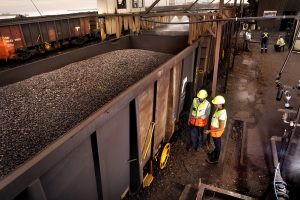
South Africa Moves to Restructure Its Manganese Export Corridor
South Africa is entering a new phase in the restructuring of its mineral export logistics. State-owned rail and port operator Transnet is seeking a private-sector partner to develop and operate the Ngqura manganese export corridor, a project that could require up to 44 billion rand, or approximately $2.7 billion.
The corridor is expected to connect mining areas in the Northern Cape with the Port of Ngqura in the Eastern Cape. The project goes beyond the construction of a new export terminal: it aims to reorganize a logistics chain currently affected by fragmented operations, significant road transport and constraints on rail capacity.
For a country that is one of the world’s major manganese producers and exporters, the performance of this corridor is directly linked to export competitiveness.

From Mine to Port: Why the Logistics Model Needs to Change
The Ngqura project is based on a straightforward principle: integrating freight flows, strengthening rail capacity and improving port operations.
Manganese exports in the Eastern Cape currently involve facilities around Port Elizabeth and Ngqura. According to Transnet, this fragmented configuration has contributed to increased road movements, higher logistics costs and growing environmental and social impacts in the Nelson Mandela Bay area.
The proposed model seeks to consolidate the logistics chain around Ngqura:
Northern Cape mines → rail → Ngqura corridor → export terminal → international shipping.
The railway connection between the mining areas and Ngqura extends for roughly 1,100 kilometres, making rail capacity a critical component of the project’s success.
For a heavy bulk commodity such as manganese, the availability and reliability of rail infrastructure directly influence the volume that can ultimately reach the port.
A Project Worth Up to 44 Billion Rand
The project is being structured around substantial private-sector participation.
According to information released by Transnet, the overall investment could range between 30 billion and 44 billion rand. The new export terminal could require around 16 billion rand, while railway infrastructure could require between 10 billion and 20 billion rand.
The proposed structure includes two main components.
The first would cover the development and operation of the terminal, railway operations, rolling stock and corridor management.
The second would focus on the financing, rehabilitation and maintenance of railway infrastructure.
Transnet is expected to retain a 51% stake in the structure responsible for terminal and corridor operations, with the private-sector partner holding 49%.
An Initial Capacity of 12 Million Tonnes per Year
The planned corridor is expected to provide an initial capacity of approximately 12 million tonnes of manganese per year, with potential expansion toward around 16 million tonnes, depending on demand and additional investment.
This capacity expansion is strategically important for South Africa’s mineral export chain.
The challenge is not simply the availability of manganese resources. Mining output can only translate into export revenue if there is sufficient rail capacity, rolling stock, storage, handling infrastructure and port capacity.
The performance of the corridor therefore becomes a determining factor in the performance of the mining sector itself.
Reducing Road Freight to Improve Logistics Efficiency
One of the project’s main objectives is to reduce the volume of road transport associated with manganese exports.
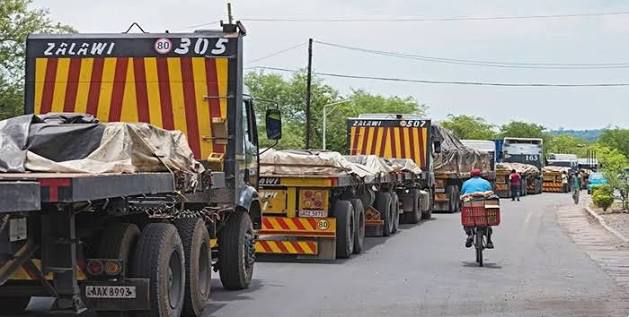
The current logistics configuration involves several handling operations and substantial truck movements. Consolidating flows through Ngqura could reduce road transfers, local congestion and heavy-vehicle traffic around Nelson Mandela Bay.
For shippers, the operational benefits could include fewer cargo transfers, greater predictability and better synchronization between rail and port operations.
For public authorities, the issue also involves externalities such as urban congestion, road infrastructure pressure and emissions associated with heavy road freight.
Why This Matters for African Corridors
The Ngqura project illustrates a broader challenge facing African logistics corridors: competitiveness depends not only on the capacity of a mine or a port, but on the coordination of the entire supply chain.
In Southern Africa, where mineral commodities represent a major share of international trade, better integration between mines, railways, ports and international markets can become a key lever for reducing logistics costs and improving freight reliability.
Beyond Manganese: A Strategic Infrastructure Issue
Manganese is primarily used in steel production and also has applications in battery technologies.
This makes export infrastructure increasingly important for South Africa’s position in global mineral supply chains.
For the country, improving the Ngqura corridor is therefore about maintaining a competitive connection between mineral-producing regions and international markets.
The project also has wider implications for the Southern African Development Community (SADC). More reliable rail and port infrastructure can strengthen connections between mining regions and export gateways while potentially improving access for other commodity producers.
The strategic issue is therefore not simply exporting more manganese. It is creating infrastructure capable of supporting more integrated and higher-value regional supply chains.
What Does the Project Mean for the AfCFTA?
The Ngqura corridor is primarily designed to support international manganese exports, meaning its immediate impact on intra-African trade differs from that of corridors connecting landlocked African economies to regional markets.
However, its relevance to the African Continental Free Trade Area (AfCFTA) lies in a broader issue: reducing transport costs and improving infrastructure so that African economies can capture more value from their natural resources.
A more efficient corridor could also support the development of regional value chains if processing, manufacturing and logistics services increasingly develop around these infrastructure networks.
The long-term question is therefore whether Africa can move from simply exporting raw minerals toward greater local and regional value addition.
Investment Opportunities in Rail and Port Infrastructure
The project has several characteristics that could attract infrastructure investors: a long-term concession, existing railway infrastructure requiring rehabilitation, a new port terminal and significant commodity volumes.
The proposed concession is expected to run for 25 years. Potential partners will also need to demonstrate financial capacity as well as technical and operational expertise.
However, the project remains at the partner-selection stage. Transnet launched its request for qualifications in September 2026, with the deadline for applications set for February 26, 2027.
Several indicators will therefore need to be monitored before the project’s actual logistics gains can be measured: construction timelines, financing arrangements, rolling-stock availability, effective rail capacity, terminal performance and export volumes.
Rail as a Driver of Mining Competitiveness
The Ngqura manganese corridor represents an attempt by South Africa to address logistics constraints through greater integration of rail, port infrastructure and freight operations.
With potential investment of up to 44 billion rand, the project highlights a central reality of modern commodity logistics: the competitiveness of a mineral increasingly depends not only on the resource itself, but also on the quality and reliability of the infrastructure connecting the mine to global markets.
For shippers and logistics operators, the key indicators will be the reduction of cargo transfers, improvements in rail reliability and lower transportation costs.
For investors, Ngqura provides a significant case study in private-sector participation in African transport infrastructure.
For regional policymakers, the project raises a broader question:
How can African countries turn mineral resources into more integrated, predictable and competitive logistics value chains?