
Africa’s Road Corridors: Infrastructure Financing Gap Threatens Regional Competitiveness

Africa’s logistics corridors face a structural financing challenge
Africa’s road corridors are becoming increasingly important to the continent’s economic integration, connecting ports, production zones, industrial centers and consumer markets.
But the ability of these corridors to support regional trade depends heavily on the availability and quality of infrastructure.

The African Development Bank estimates that Africa requires between $130 billion and $170 billion in infrastructure investment every year, while the continent faces an annual financing gap of approximately $68 billion to $108 billion. This gap covers infrastructure broadly and is not limited to road transport.
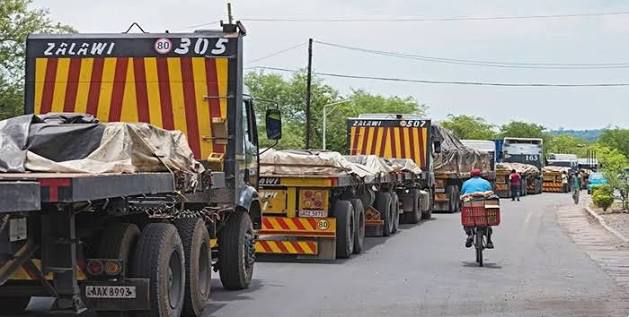
For logistics corridors, the implications are direct. Poor road conditions, incomplete links, congested border crossings and weak logistics infrastructure can increase transit times and raise the cost of moving goods across borders.
As the African Continental Free Trade Area (AfCFTA) seeks to expand intra-African trade, the challenge is therefore not simply to build more roads. It is to finance integrated transport networks capable of moving goods more predictably and competitively across borders.
Road corridors remain critical to African trade
Road transport remains the dominant mode for moving people and goods across much of Africa.
Estimates indicate that roads carry around 80% of freight and 90% of passenger traffic on the continent.
This makes road corridors much more than transport routes.
They connect landlocked economies to seaports, agricultural production areas to urban markets, and industrial zones to regional consumers.
A high-performing corridor must therefore provide more than a paved road. It needs:
- reliable transport infrastructure;
- efficient border crossings;
- secure cargo movements;
- predictable transit times;
- functional logistics platforms;
- digital customs systems;
- and connections to other transport modes.
The performance of a corridor is ultimately determined by the entire logistics chain.
From road infrastructure to economic corridors
African governments and regional institutions are increasingly moving from a road-project approach toward the development of broader economic corridors.
The Abidjan-Lagos Corridor is a major example.
The planned highway will connect Abidjan and Lagos over approximately 1,028 kilometres, crossing Côte d’Ivoire, Ghana, Togo and Benin.
The project goes beyond road construction, with components aimed at logistics, trade facilitation and economic development.
In December 2025, ECOWAS said feasibility and design studies, as well as financing options, had provided a basis for moving toward the implementation phase. The estimated cost was approximately $14.7 billion, with a financing structure expected to involve both public and private capital.
For shippers, this approach is significant because a regional corridor must operate as a single logistics system rather than as a succession of disconnected national road sections.
West Africa needs a network of connected corridors
The financing challenge extends beyond the Abidjan-Lagos axis.
ECOWAS is also advancing the Praia-Dakar-Abidjan corridor, a multimodal initiative combining road and maritime connectivity.
The corridor covers approximately 3,164 kilometres and is designed to connect several West African markets, including Praia, Dakar, Banjul, Bissau, Conakry, Freetown, Monrovia and Abidjan.
Its strategic value lies in strengthening links between coastal economies and improving the movement of goods and people across national borders.
This points to a broader shift: African trade will increasingly depend on how effectively different corridors connect with one another.
Secondary roads are part of corridor performance
Major highways cannot operate efficiently without adequate feeder networks.
Roads linking agricultural areas, mining regions, industrial zones and local markets to major corridors determine whether producers can actually access regional trade routes.
In Benin, for example, transport links connecting Cotonou with northern markets and landlocked neighboring countries form part of the logistics network serving Niger and Burkina Faso.
The same principle applies to regional logistics hubs such as Bobo-Dioulasso in Burkina Faso.
The infrastructure financing gap must therefore be considered at the network level, rather than focusing exclusively on major highways.
Transit times remain a critical issue for African shippers
For businesses, infrastructure inefficiencies translate directly into logistics costs.
Poor road conditions increase vehicle operating costs, maintenance requirements and travel times.
Border congestion creates additional waiting time.
Fragmented administrative procedures can generate repeated controls and documentation requirements.
Every additional hour can mean a truck, driver and cargo remaining immobilized instead of generating productive transport capacity.
The consequences can be particularly significant for agricultural and perishable products.
Reducing transit times therefore requires a combination of physical and institutional investments:
roads + bridges + border posts + digital customs + cargo tracking + harmonized procedures.
This is what turns a road project into a functioning logistics corridor.
Customs digitalization can be as important as road construction
Infrastructure financing should not be limited to physical assets.
Digital customs systems and the advance transmission of cargo information can help reduce certain border procedures and improve the predictability of cross-border movements.
For corridor users, the objective is not necessarily to achieve the shortest geographical route.
A slightly longer corridor with predictable transit times can be more commercially attractive than a shorter route characterized by unpredictable delays.
For shippers, reliability is itself a logistics asset.
Private capital will be increasingly important
The scale of Africa’s infrastructure requirements exceeds the fiscal capacity of many governments.
The African Development Bank has repeatedly highlighted the need to increase private-sector participation, including through public-private partnerships (PPPs) and financing mechanisms capable of turning regional infrastructure projects into bankable investments.
However, attracting private capital requires more than identifying infrastructure needs.
Projects need credible feasibility studies, transparent regulatory frameworks, predictable revenue models, clear governance arrangements and appropriate risk-sharing mechanisms.
Regional corridor authorities can also play an important role by providing governance structures that extend beyond individual national administrations.
The creation of the Abidjan-Lagos Corridor Management Authority (ALCoMA) illustrates this approach. In June 2026, its board held its first meeting in Lagos, bringing together public and private stakeholders from the five countries along the corridor.
What does this mean for AfCFTA?
The success of the African Continental Free Trade Area will depend partly on the continent’s ability to physically move goods at competitive costs.
Reducing tariffs alone cannot deliver the expected benefits of continental trade integration if transporting goods between African markets remains slow, expensive or unpredictable.
Transport corridors are therefore one of the physical foundations of AfCFTA.
They must connect production centers with consumers, ports with landlocked countries and industrial zones with regional markets.
Africa’s trade competitiveness will consequently depend not only on trade agreements, but also on the operational performance of its logistics networks.
The challenge is no longer simply to connect countries. It is to make those connections reliable enough for regional trade to scale.
Why this matters for African corridors
A corridor performs only as well as its weakest operational link.
For policymakers, corridor performance should increasingly be measured through indicators such as:
- average transit time;
- border waiting time;
- transport cost per tonne-kilometre;
- infrastructure availability;
- route reliability;
- cargo volumes;
- maintenance costs;
- and frequency of disruptions.
For shippers, these indicators provide a clearer picture of the real cost and reliability of a corridor.
For investors, they can help identify infrastructure segments where improved connectivity could generate sufficient economic activity to support sustainable investment models.
Africa needs to finance networks, not just roads
Africa’s $68 billion–$108 billion annual infrastructure financing gap represents a structural constraint on the continent’s development.
In transport, however, closing that gap should not simply mean adding more kilometres of road.
The strategic objective is to build integrated corridors combining roads, bridges, efficient border posts, digital customs, logistics platforms, multimodal connections and coordinated cross-border governance.
Projects such as Abidjan-Lagos and Praia-Dakar-Abidjan illustrate the transition toward this economic-corridor model.
The financing challenge is substantial, but it also represents a significant investment opportunity across transport infrastructure, logistics services, digital trade facilitation and corridor management.
The strategic question is therefore increasingly clear:
Can Africa transform its infrastructure financing needs into bankable, measurable projects that make the movement of goods faster, more predictable and more competitive?