
Morocco–Mauritania: Rehabilitation of the Nouakchott–Nouadhibou Route Strengthens a Strategic Maghreb–West Africa Corridor

480-kilometre road link at the heart of regional connectivity
The Morocco–Mauritania corridor is entering a new phase following the signing of a framework agreement to rehabilitate and widen the Nouakchott–Nouadhibou road, covering approximately 480 kilometres.
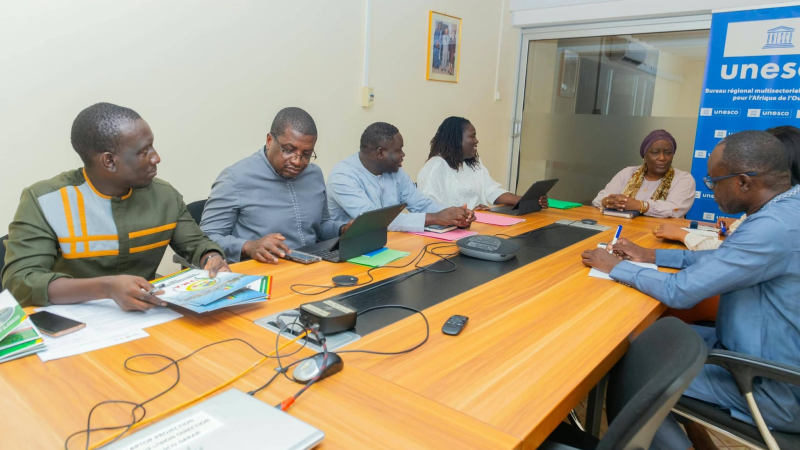
Signed in Rabat on 21 September 2026, the agreement brings together the Moroccan and Mauritanian authorities around a central objective: improving road connectivity between the two countries while strengthening the movement of goods and economic operators.
Beyond its bilateral dimension, the project concerns a key land link between West Africa, Mauritania and the Maghreb. Its future performance will depend not only on road quality, but also on transit management, border procedures, maintenance and the ability to provide greater operational predictability for carriers and shippers.

The Nouakchott–Nouadhibou corridor as a logistics backbone
The framework agreement covers the rehabilitation, widening, improvement and ongoing maintenance of the Nouakchott–Nouadhibou road, including the section through kilometre point 55 (PK55).
A joint engineering office is also expected to be established in Mauritania to provide technical monitoring and support cooperation between the two countries.
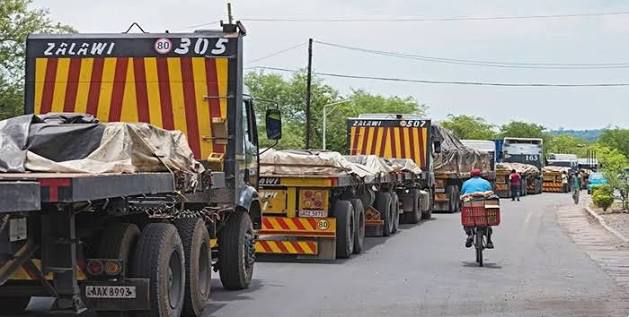
For transport operators, the value of such infrastructure cannot be measured simply in kilometres of road. What matters operationally is travel-time reliability, road availability, vehicle safety and delivery predictability.
Mauritania had already identified the rehabilitation and reconstruction of damaged sections of the Nouakchott–Nouadhibou road among its 2026 infrastructure priorities. The country is also pursuing investments in the port infrastructure of Nouakchott and Nouadhibou.
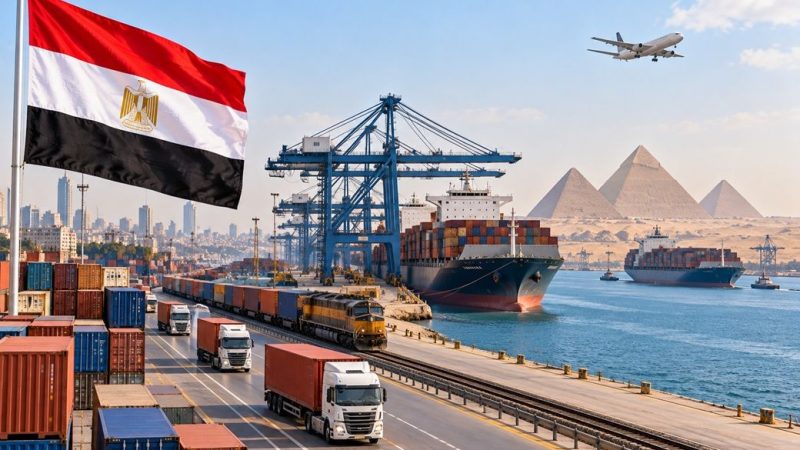
The combination of road and port investments could gradually strengthen Mauritania’s position as a logistics bridge between West African markets and northern trade networks.
Reducing logistics uncertainty is the real challenge
For shippers, corridor performance is not determined solely by the speed at which trucks can travel.
Poor road conditions can generate delays, higher vehicle maintenance costs, breakdowns and operational disruptions. A properly upgraded and maintained road, by contrast, can allow carriers to better plan their rotations and improve supply-chain reliability.
However, infrastructure is only one component of corridor performance.
Customs procedures, border controls, checkpoints, digital transit systems and institutional coordination can also have a significant impact on the final delivery time.
For the Nouakchott–Nouadhibou corridor, the next challenge will therefore be to convert physical infrastructure improvements into measurable operational gains.
Key performance indicators should include:
- average transit time;
- waiting time at checkpoints;
- transport cost per tonne;
- vehicle breakdown and immobilisation rates;
- number of rotations per vehicle;
- delivery reliability;
- border-crossing processing time.
From a road project to a Maghreb–West Africa economic corridor
The strategic significance of the project extends beyond the relationship between Nouakchott and Nouadhibou.
The route forms part of a broader north–south logistics connection linking Mauritania with Morocco and, through the wider regional network, with West African markets.
This geographical position gives the project the characteristics of a transregional economic corridor.
For businesses, improved road continuity could facilitate the movement of goods between Mauritanian economic centres, ports and commercial networks further north and south.
This connectivity is particularly relevant in the context of the African Continental Free Trade Area (AfCFTA). Greater intra-African trade requires not only tariff reforms, but also reliable transport infrastructure, efficient transit systems and predictable logistics services.
The Nouakchott–Nouadhibou axis therefore has potential significance beyond bilateral trade: it can contribute to the physical connectivity required for deeper regional market integration.
What could change for transit times and logistics costs?
It would be premature to quantify the project’s future savings because the final technical specifications, implementation schedule and post-construction performance indicators have not yet been established.
The economic mechanism, however, is clear.
A stronger road infrastructure can reduce costs associated with vehicle maintenance, delays, breakdowns and traffic disruptions. Improved road capacity and surface quality can also increase the efficiency of heavy-freight operations.
But shorter transit times will only become sustainable if the entire corridor operates as an integrated system.
A modern road can still generate limited economic gains if trucks subsequently face lengthy border procedures, repeated inspections or inefficient customs processes.
For the Morocco–Mauritania corridor, infrastructure investment should therefore be accompanied by improvements in border management, customs facilitation, transit digitalisation and logistics services.
Joint technical governance and climate resilience
The planned joint engineering office in Mauritania is an important element of the agreement.
Its role in technical monitoring and coordination could help ensure that infrastructure works remain aligned with the operational requirements of the corridor.
The inclusion of climate resilience is equally significant.
For a major road connection crossing a largely arid environment, building or rehabilitating the road is only the first step. Long-term performance will depend on maintenance capacity and the ability to adapt infrastructure to changing environmental conditions.
The economic value of the corridor should therefore be assessed over its entire life cycle: construction, maintenance, repairs, safety, availability and climate adaptation.
New opportunities for logistics investment
Improving the road could also create opportunities for private-sector logistics operators.
More reliable freight flows can support the development of complementary services such as:
- long-haul road transport;
- warehousing;
- freight distribution;
- heavy-vehicle maintenance;
- logistics platforms;
- digital freight-tracking solutions;
- customs and transit services.
The relationship between the road network and Mauritania’s ports will also be important.
Government infrastructure plans for 2026 include investments involving the Port of Nouadhibou as well as port infrastructure in Nouakchott.
The combination of road connectivity + ports + logistics services + trade facilitation could gradually transform the route from a simple transport link into a broader regional logistics ecosystem.
Why this matters for African corridors
The Nouakchott–Nouadhibou project illustrates a broader trend across Africa: corridor competitiveness depends not only on infrastructure construction, but on the ability to deliver predictable, secure and cost-efficient transit.
For shippers, the key issue will be measuring actual savings in time and logistics costs. For governments, the priority will be coordinating roads, borders, customs and ports. For investors, more predictable freight flows could create demand for new logistics services.
A stronger connection between West Africa and the Maghreb
The Morocco–Mauritania corridor has a distinctive geographical position: it sits at the intersection of two major economic regions, the Maghreb and West Africa.
Its development should therefore be viewed alongside other major African corridor projects designed to connect ports, production centres, border crossings and inland markets.
In this context, rehabilitating the Nouakchott–Nouadhibou route is not an end in itself. Its strategic value will ultimately depend on its ability to connect ports, logistics platforms, production areas, border posts and consumer markets efficiently.
The decisive indicator will therefore not simply be the number of kilometres rehabilitated, but the overall performance of the corridor.
corridor performance will be measured after construction
The Morocco–Mauritania framework agreement covering 480 kilometres between Nouakchott and Nouadhibou adds an important component to the development of stronger land connectivity between the Maghreb and West Africa.
The project combines road rehabilitation, widening, maintenance, technical cooperation and climate-resilience considerations.
For shippers and carriers, its real impact should ultimately be measured through lower waiting times, greater route reliability and better control of logistics costs.
For investors, the key question will be whether improved infrastructure generates sufficiently regular freight flows to support new logistics services.
The project therefore fits into a wider strategic objective: turning a critical road connection into an economic corridor capable of linking West African and Maghreb markets more efficiently.