
Copper in the DRC and Zambia: Why Road Transport Remains Critical Despite Billions Invested in Rail
The performance of DRC-Zambia logistics corridors is becoming a decisive factor in the competitiveness of African copper. As the Democratic Republic of Congo (DRC) and Zambia seek to increase copper production, billions of dollars are being committed to railway infrastructure, border posts and logistics platforms.
Yet the shift from road to rail will not happen overnight.
Copper produced across the Copperbelt must travel hundreds, and in some cases thousands, of kilometres before reaching Atlantic or Indian Ocean ports. Within this network, road transport remains essential for connecting mines with rail terminals, border crossings and logistics hubs.

Current investments therefore point less towards the replacement of road freight by rail than towards a reconfiguration of the region’s multimodal logistics system.
Copper remains dependent on several export corridors
The DRC and Zambia have several options for moving copper to international markets, including the Lobito Corridor towards Angola, the North-South Corridor towards southern African ports, and the Dar es Salaam route through Tanzania.
This diversification is becoming increasingly important as mining volumes grow.
For copper and sulphur flows in Zambia, the World Bank has highlighted the importance of several export routes, including Durban, Dar es Salaam and Walvis Bay. The North-South and Dar es Salaam corridors also account for a significant share of Zambia’s international freight movements.
This explains why border performance remains a critical component of the mining supply chain.
A slowdown at Kasumbalesa, Chirundu or Nakonde does not affect transport operators alone. It directly influences exporters’ delivery times, fleet utilisation, inventory requirements and ultimately the landed cost of copper.
Kasumbalesa: a critical pressure point between the DRC and Zambia
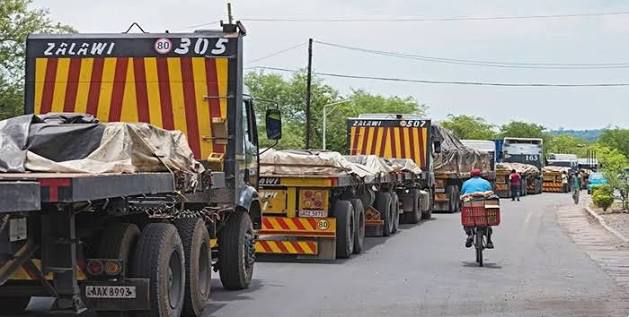
At the DRC-Zambia border, Kasumbalesa is one of the most sensitive nodes in the Copperbelt’s logistics network.
Kinshasa is preparing a dry port project intended to improve the handling of freight and reduce congestion around the border crossing. The project, developed under a long-term concession, represents an announced investment of approximately $600 million. Construction is expected to begin in January 2027.
The objective goes beyond simply adding parking capacity.
A properly designed dry port can move several logistics and customs operations away from the immediate border area, allowing trucks to be processed in a more structured environment.
The real issue: reducing the cost of time
For mining companies, additional transit days are not simply a scheduling problem.
They translate into higher fuel consumption, vehicle immobilisation costs, driver expenses, parking charges and greater exposure to operational disruptions.
The World Bank has identified transport costs as a major constraint on Zambia’s mining competitiveness, with logistics costs potentially accounting for a substantial share of the value of certain mineral products.
For copper exporters operating on long-distance routes, border efficiency therefore becomes an economic variable.
Chirundu: road transport remains a strategic Copperbelt asset
The recent financing arrangements for the modernisation of Chirundu, on the Zambia-Zimbabwe border, reinforce the continued importance of road freight.
The crossing sits on the North-South Corridor, linking the Copperbelt with ports and markets across southern Africa.
Copper and other mining-related cargoes move through this route alongside fuel, mining equipment, agricultural inputs and other regional freight.
Modernising Chirundu should therefore be viewed as part of a broader effort to increase corridor reliability rather than as a stand-alone border project.
For shippers, the key performance indicator will ultimately be straightforward:
How many hours—or days—can the investment remove from the border-crossing process?
Nakonde and Dar es Salaam: another critical route for copper exporters
On Zambia’s eastern frontier, the Nakonde-Tunduma crossing provides access to the Tanzanian transport network and the port of Dar es Salaam.
The corridor is particularly important for Zambia because it provides an alternative route to the southern African ports.
Investments supported by the World Bank are designed to improve transport and trade connectivity between Zambia and Tanzania, including through better border management, digitalisation and the development of a more efficient transport corridor.
The issue therefore extends beyond road infrastructure.
The performance of a corridor increasingly depends on the ability of customs authorities and border agencies to exchange data, coordinate inspections and eliminate duplicated procedures.
For shippers, an additional kilometre of road can sometimes be less costly than an additional day spent waiting at a border.
Lobito and TAZARA: rail is changing the logistics equation
Rail is nevertheless becoming increasingly important in the Copperbelt’s logistics architecture.
The Lobito Corridor already provides a concrete example of the potential time savings associated with rail freight.
For Kamoa-Kakula in the DRC, rail transport to the Angolan port of Lobito has significantly reduced transit times compared with road routes towards southern and eastern African ports. Ivanhoe Mines has reported rail transit times of roughly one week for certain shipments, compared with considerably longer road journeys.
Such differences can influence the logistics decisions of mining companies.
The same applies to TAZARA, the Tanzania-Zambia railway, whose rehabilitation is intended to restore freight capacity along the Dar es Salaam corridor.
The strategic objective is not simply to create an alternative to road transport, but to develop a rail system capable of absorbing part of the future growth in mineral freight.
Why rail will not completely replace trucking
The expected growth in copper production nevertheless limits the extent to which rail can substitute for road transport.
Zambia has set an objective of reaching 3 million tonnes of annual copper production by 2031. Achieving such volumes will require not only additional mining capacity, but also sufficient energy, rail, road, border and port capacity.
At the same time, mines are geographically dispersed, and not all mining sites have direct access to railway infrastructure.
The most realistic model is therefore multimodal:
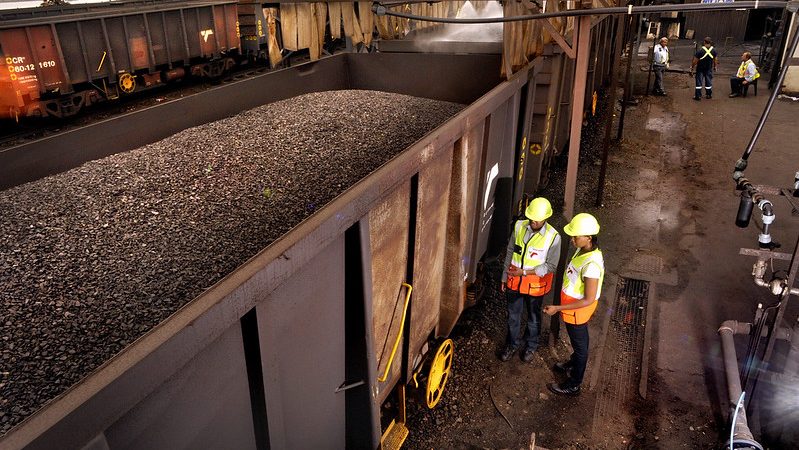
Mine → Road → Logistics hub → Rail → Port
Road transport will remain particularly important for first-mile and last-mile operations, as well as for mines located far from railway networks.
The real competitive advantage is corridor reliability
For mining companies and investors, the question is no longer simply road versus rail.
It is:
Which corridor provides the best combination of capacity, cost, transit time and reliability?
A high-performing railway with limited available capacity can quickly become constrained as mineral volumes increase.
Conversely, a well-managed road corridor with efficient border procedures can remain competitive for specific cargo flows.
This explains why simultaneous investment in railways, roads, dry ports, border posts and digital customs systems is strategically significant.
Why this matters for African corridors
The Copperbelt is becoming a test case for multimodal transport in Africa.
Lobito, Dar es Salaam, Durban, Beira, Walvis Bay and the North-South Corridor should not be viewed only as competing routes. Together, they form a network of logistics options that can reduce producers’ dependence on a single export outlet.
For the African Continental Free Trade Area (AfCFTA), this diversification is strategically relevant.
Better infrastructure connectivity and shorter border delays can support not only mineral exports, but also the movement of mining equipment, industrial inputs and services required to develop regional value chains.
The issue therefore extends beyond copper. It concerns the ability of SADC countries and the wider Copperbelt to build more predictable, interconnected and competitive logistics chains.
The shipper’s priority: measure corridor performance
The next phase of investment should be assessed through measurable operational indicators, including:
- average border-crossing time;
- truck waiting time;
- transport cost per tonne;
- railway frequency and available capacity;
- equipment availability;
- number of inspections and procedures;
- customs processing time;
- schedule reliability;
- frequency of cargo transshipment.
These indicators will determine the real competitiveness of the corridors.
Modernising Kasumbalesa, Chirundu and Nakonde can reduce road-related bottlenecks. Expanding Lobito and rehabilitating TAZARA can increase railway capacity.
But without customs interoperability, digital systems, data sharing and cross-border coordination, infrastructure investments will deliver only part of their potential gains.
The future of African copper will depend on multiple corridors
Copper logistics in the DRC and Zambia are entering a period of structural change.
Rail is becoming more competitive over long distances, particularly through the Lobito Corridor. Yet road transport remains indispensable for connecting mines with railway networks, border crossings and logistics platforms.
The strategic priority is therefore not to choose between road and rail, but to build a multimodal system capable of absorbing future growth in mineral volumes.
For governments, investors and logistics operators, the next challenge is to convert billions of dollars in announced infrastructure investments into measurable performance gains: shorter border delays, greater rail capacity, controlled logistics costs and more predictable export flows.
In the Copperbelt, the competitiveness of copper will increasingly depend not only on what happens inside the mines, but also on how efficiently the corridors move the output to global markets.