
Senegal: PUMA Strengthens Border Infrastructure to Support Regional Corridor Perform

Senegal’s border territories emerge as a strategic logistics priority
Senegal’s border corridors and infrastructure are an important component of regional connectivity, linking production areas, markets and neighboring countries across West Africa.
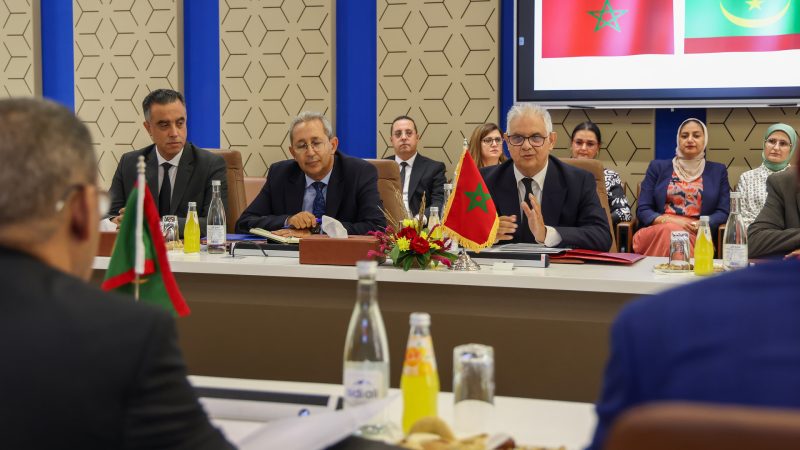
In January 2023, the Programme d’Urgence de Modernisation des Axes et Territoires Frontaliers (PUMA) held discussions with the United Nations system in Senegal to explore new areas of cooperation for border territories.

The meeting in Dakar brought together several UN agencies, including the United Nations Development Programme (UNDP), UNHCR, the International Organization for Migration (IOM), UNICEF, FAO and UNFPA.
Beyond the social-development dimension, the initiative raises a broader logistics question: how can border territories become better connected, more resilient and more integrated into regional trade corridors?
PUMA places border connectivity at the center of its strategy
Established in 2016 and operational since 2017, PUMA operates in Senegal’s border regions with Gambia, Guinea-Bissau, Guinea, Mali and Mauritania.
Its intervention framework covers three main areas: opening up isolated territories, sustainable development and border security.
The infrastructure component goes beyond major roads. The programme also considers rural roads, waterways, maritime connections, telecommunications and digital connectivity.
For logistics operators, this integrated approach matters because corridor performance does not depend solely on the condition of a main highway.
Transit reliability is also influenced by access roads, border facilities, administrative procedures, security conditions and the availability of digital services.
Connecting local economies to regional corridors
PUMA’s infrastructure objectives include thousands of kilometres of rural tracks and hundreds of kilometres of roads targeted for upgrading or construction.
These links can serve as feeder routes connecting production areas to major transport corridors, markets and border crossings.
This creates an important last-mile logistics challenge.
A major regional corridor can deliver limited economic value to producers if local roads remain difficult to use. Conversely, better feeder infrastructure can expand the geographic area effectively connected to a corridor.
For shippers, the key indicators are therefore not limited to kilometres of road constructed. They include transit time, route reliability, vehicle operating costs and access to markets.
Cooperation broadens the approach beyond physical infrastructure
The Dakar meeting also opened discussions on cooperation between PUMA and several UN agencies.
The UNDP became particularly involved through a project focused on strengthening human security in selected border municipalities.
The project targeted five municipalities: Médina Baffé, Sadatou, Karang, Bokidiawé and Adéane.
Its objectives included strengthening social protection, economic resilience, income-generating activities and local governance.
In 2023, UNDP and PUMA subsequently carried out diagnostic missions in these municipalities to assess local needs and prepare project activities.
For a corridor to perform sustainably, infrastructure must be supported by functioning local economies, secure border environments and resilient communities.
What could change for transit times and logistics costs?
Improving border infrastructure can affect logistics costs through several channels.
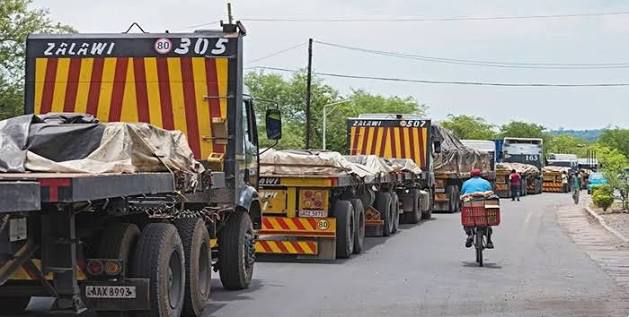
Poor access roads can create detours, increase vehicle operating costs and generate additional waiting time. These inefficiencies become particularly significant for agricultural products and other time-sensitive cargo.
Better connections between production areas and major corridors can, by contrast, reduce some of these logistical frictions and improve access to markets.
However, the available information does not provide sufficient data to quantify specific reductions in transit times or logistics costs resulting from PUMA interventions.
Actual gains will depend on infrastructure quality, maintenance, border procedures, customs efficiency and coordination between administrations.
For shippers, this underlines the importance of measuring corridor performance through operational indicators such as:
- average border-crossing time;
- truck waiting time;
- transport cost per kilometre;
- cargo dwell time;
- road reliability;
- frequency of disruptions;
- and volumes of cross-border trade.
Why border infrastructure matters to shippers
For companies operating across West African markets, border territories are part of the logistics chain rather than isolated administrative spaces.
Senegal’s borders connect the country with Gambia, Mauritania, Mali, Guinea and Guinea-Bissau, giving border infrastructure a regional dimension.
Modern border facilities, improved roads and better security can reduce friction along transport routes.
Security is particularly relevant because unexpected delays, cargo risks and route disruptions can translate into additional costs for transport operators and shippers.
The development of border infrastructure should therefore be assessed not only through its social impact, but also through its contribution to supply-chain reliability and regional trade.
A potential contribution to West African trade integration
The development of Senegal’s border territories also fits into the broader objective of regional economic integration.
Across West Africa, transport corridors connect ports with inland production areas and consumer markets. Their performance depends on the continuity of infrastructure and procedures across national borders.
Improving Senegal’s border connections could therefore strengthen links with neighboring countries and support cross-border trade flows.
This is consistent with the broader objectives of the African Continental Free Trade Area (AfCFTA), which requires more than tariff reforms to become fully operational.
Physical connectivity, efficient border procedures, reliable transport services and logistics infrastructure are also necessary to convert market access into actual trade flows.
The strategic challenge is therefore one of corridor continuity: an efficient road on one side of a border can lose part of its value if infrastructure or procedures deteriorate on the other side.
Investment opportunities around border logistics
Border development also creates potential opportunities for private-sector investment.
These opportunities can extend beyond road construction to include:
- logistics platforms;
- warehousing;
- cold-chain infrastructure;
- vehicle maintenance;
- digital logistics services;
- cargo tracking;
- border technology;
- and transport support services.
According to PUMA, its interventions had reached 191 border municipalities between 2017 and 2024, alongside more than 22,000 direct and indirect jobs and 455 social infrastructure and equipment projects.
These figures illustrate the broader economic footprint that border investment can generate.
For investors, however, infrastructure availability alone is not enough. The key question is whether improved connectivity can generate sufficiently stable trade volumes and commercial demand to support sustainable logistics businesses.
Why this matters for African corridors
The central issue for African corridors is continuity.
A high-quality road loses part of its value when border crossing procedures create long delays.
A modern border post cannot operate efficiently if access roads remain inadequate.
Likewise, logistics infrastructure may remain underutilized if producers and local businesses lack reliable access to markets.
The PUMA approach illustrates the importance of combining:
infrastructure + security + economic resilience + social services + digital connectivity.
For policymakers and corridor managers, the relevant performance indicators should therefore go beyond the number of kilometres built.
The focus should increasingly be on transit times, logistics costs, border delays, trade volumes and route reliability.
Shifting from infrastructure delivery to corridor performance
The cooperation initiated between PUMA and the United Nations system in 2023 illustrates a broader shift in the way border territories can be approached.
Infrastructure remains fundamental, but its economic impact depends on the wider environment in which transport corridors operate.
For West African corridors, the next step is to measure actual performance: transit times, border delays, transport costs, cargo flows, market access and infrastructure utilization.
This approach allows border investments to be assessed not only as territorial-development projects, but also as potential contributors to regional logistics competitiveness and African economic integration.
For shippers, investors and public authorities, the strategic question is ultimately the same: can infrastructure translate into faster, more predictable and more competitive cross-border trade?