
Abidjan-Lagos Corridor: Regional Monitoring Mechanism Targets Lower Transit Times and Road Freight Costs

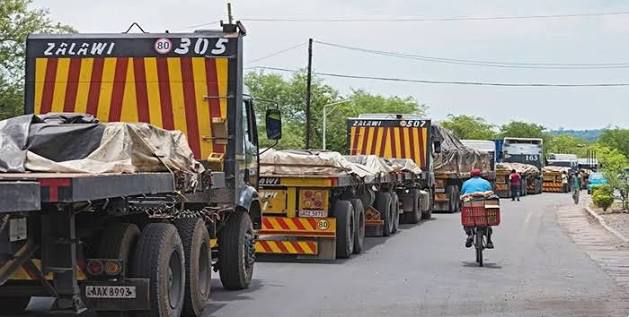
The Abidjan-Lagos Corridor is entering a new operational phase with the deployment of a regional monitoring mechanism for interstate transport. A working mission held in Togo and Benin on September 17–18, 2026, brought together stakeholders from Côte d’Ivoire, Togo and Benin to assess obstacles affecting the movement of vehicles and goods. According to Fraternité Matin, the mechanism has been associated with shorter travel times between Abidjan and Cotonou and a reduction in informal costs reported by transport operators. The development puts greater focus on measurable corridor performance, particularly transit times, border procedures and the predictability of cross-border freight movements.
Abidjan-Lagos Corridor: Regional Monitoring Moves into the Operational Phase
The mission led by Koné Vaffi, president of the Confederation of West African Road Transport Drivers’ Unions (CSCRAO), forms part of the work carried out by national steering committees in Côte d’Ivoire, Togo and Benin.
The objective is operational: improve implementation of the regional monitoring mechanism for interstate transport and identify bottlenecks affecting freight flows. Discussions focus on vehicle movements, cargo transportation and conditions at border crossing and control points.

The Abidjan-Lagos Corridor connects five major West African economies: Côte d’Ivoire, Ghana, Togo, Benin and Nigeria. Its performance therefore has implications beyond individual national transport systems.
Shorter Transit Times Between Abidjan and Cotonou
One of the key performance indicators concerns transit time. According to Koné Vaffi, the Abidjan-Cotonou journey can now be completed in one day, compared with three to four days previously.
For logistics companies, a shorter vehicle turnaround time can improve fleet utilisation. For shippers, greater predictability can facilitate inventory planning, delivery schedules and coordination with port operations.
However, travel time alone does not determine corridor performance. The reliability of border procedures, waiting times, inspections and documentation requirements also directly influence the total logistics cost.
Sèmè-Kraké: A Critical Border Point on the Abidjan-Lagos Corridor
The delegation subsequently visited the Sèmè-Kraké Joint Border Post, located between Benin and Nigeria.
The working session focused on presenting the regional mechanism and examining its expected contribution to interstate road transport and the movement of goods.
For supply-chain operators, border performance is a critical component of total transit time. A corridor can have adequate road infrastructure while still generating significant delays if vehicles face lengthy inspections, duplicated procedures or unpredictable queues.
The Sèmè-Kraké crossing is therefore an important operational point for monitoring the performance of the West African trade corridor.
Logistics Costs and the Issue of Informal Payments
The regional mechanism also addresses what transport operators refer to as “informal costs” encountered along the corridor.
Reducing these additional costs could improve cost visibility for carriers and shippers. It could also make transport pricing more predictable across the different stages of a cross-border journey.
For cargo owners, the relevant indicator is not simply the freight rate. The total landed logistics cost also includes border delays, vehicle immobilisation, administrative procedures and other expenses incurred during transit.
Why This Matters for African Corridors
1. For shippers: More predictable transit times can improve inventory management, delivery planning and supply-chain reliability.
2. For transport operators: Reduced waiting times can increase vehicle utilisation and improve fleet rotation.
3. For regional competitiveness: Better cross-border flows can support intra-African trade and contribute to the objectives of the African Continental Free Trade Area (AfCFTA).
Corridor Governance Becomes a Logistics Performance Tool
The latest developments show that improving the Abidjan-Lagos Corridor is not only an infrastructure issue.
Customs coordination, border management, data collection and harmonisation of procedures are equally important. Performance needs to be measured through indicators such as border waiting times, transit duration, number of controls, logistics costs and vehicle turnaround time.
ECOWAS has also been working to improve operations at joint border posts. Training and coordination initiatives at Sèmè-Kraké are part of broader efforts to strengthen cross-border trade facilitation.
At the infrastructure level, the planned Abidjan-Lagos highway project is designed to connect Abidjan, Accra, Lomé, Cotonou and Lagos while supporting regional trade and transport connectivity.
Regional Perspective: A Strategic Corridor for AfCFTA
The Abidjan-Lagos Corridor is one of West Africa’s key commercial routes. Its performance affects connections between seaports, industrial zones, distribution centres and major consumer markets.
For the AfCFTA, the challenge is to convert infrastructure and trade-facilitation measures into measurable logistics gains: shorter and more predictable transit times, controlled costs and smoother movement of goods.
The development of the Abidjan-Lagos Corridor Management Authority (ALCoMA) also points toward more integrated corridor governance involving the five countries concerned and regional institutions.
The regional monitoring mechanism provides another tool for improving the performance of the Abidjan-Lagos Corridor. The next step will be to translate reported time savings and reduced obstacles into regular, verifiable performance indicators, particularly for border waiting times, transit costs and overall journey reliability. For shippers, logistics operators and investors, these indicators will be essential for assessing the corridor’s actual competitiveness.