
CAR–Cameroon Mining Corridor: The CFAF 3,386 Billion Rail Project Could Put Kribi at the Center of a New Central African Export Route
CAR–Cameroon Mining Corridor: A Major Rail Project With Regional Implications
The proposed CAR–Cameroon mining corridor could significantly alter the geography of mineral exports in Central Africa. A&S Resources announced on September 4, 2026, that it had secured a $6 billion financing package, equivalent to approximately CFAF 3,386 billion, for a railway project designed to connect its iron ore assets in the Central African Republic (CAR) with the deep-water port of Kribi in Cameroon.
On paper, the project addresses a structural challenge: connecting a landlocked mineral-producing country to an international maritime gateway. For shippers, investors and public authorities, however, the key question is now the bankability and operational integration of the corridor.
The announced investment covers a project of approximately 1,350 km, while several details concerning the Cameroonian section, its route, connection to Kribi and port-side infrastructure remain to be clarified.

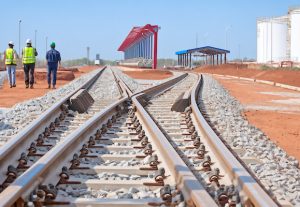
A 1,350 km railway designed to connect CAR resources to global markets
According to A&S Resources, the proposed railway would connect mineral resources in CAR to Kribi Port, providing Central African production with direct access to international maritime markets.
The company describes the project as a heavy-haul, double-track railway.
Its initial capacity is expected to reach 250,000 tonnes per day, with the possibility of increasing capacity to 300,000 tonnes per day. In purely theoretical annual terms, that corresponds to approximately 91.25 million tonnes and 109.5 million tonnes respectively.
These figures demonstrate the scale of the proposed infrastructure.
They should not, however, be interpreted as guaranteed future traffic. Railway capacity and actual cargo volumes are two different indicators.
The corridor’s economic performance will ultimately depend on the synchronization of mining production, rail availability, storage, port handling and maritime capacity.
Kribi becomes the strategic maritime gateway
The project comes as Kribi continues to strengthen its role as a gateway for Cameroon’s hinterland.
The Port Authority of Kribi reported that the port handled 12.7 million tonnes of cargo and 555,398 TEUs in 2025, with cargo traffic increasing compared with 2024.
The proposed CAR corridor would potentially introduce a completely different volume scale.
A theoretical annual railway capacity exceeding 90 million tonnes would represent several times the port’s current total cargo throughput.
This raises an important operational question: can Kribi absorb such volumes if the mining project reaches its targeted production levels?
The answer depends on infrastructure that extends well beyond the railway itself.
The corridor would require:
- mineral storage facilities;
- rail unloading and loading systems;
- dedicated handling equipment;
- stockpiling capacity;
- ship-loading infrastructure;
- internal rail connections within the port;
- sufficient maritime capacity.
The real challenge is therefore the integration between the inland railway corridor and the maritime gateway.
The Cameroonian section remains a critical variable
The announced $6 billion financing package relates to the overall railway project. Publicly available information does not yet provide a detailed breakdown of the investment allocated to the Cameroonian section.
This matters for assessing the project’s economic impact on Cameroon.
A corridor of this scale requires much more than railway tracks. Depending on the final design, it could require bridges, crossings, freight stations, maintenance facilities, logistics platforms and port-connection infrastructure.
For investors, one of the next important milestones will therefore be a clearer distinction between:
- railway financing;
- mining infrastructure;
- port infrastructure;
- logistics facilities;
- supporting public infrastructure.
Such information will also help determine whether additional public investment or sovereign guarantees could be required.
Another railway project is already moving toward Kribi
The CAR–Kribi project must also be considered within the wider development of Cameroon’s railway network.
On June 4, 2026, the Government of Cameroon, Africa Global Logistics (AGL) and CAMALCO signed a memorandum of understanding concerning the development of the approximately 185-km Edéa–Kribi–Lolabé–Campo railway line. The agreement covers the updating of studies and preparations related to financing, construction, operation and maintenance.
The line is intended to improve Kribi’s hinterland connectivity and support industrial and mining development in southern Cameroon.
This creates a strategic question around infrastructure integration.
If multiple mining projects can use shared railway and port infrastructure, capital expenditure could potentially be optimized and cargo volumes consolidated.
Conversely, independently developed networks and terminals could increase investment requirements and create competing or underutilized capacity.
For Kribi, integrated corridor planning will therefore be critical.
Transit time will depend on logistics interfaces
One of the main potential advantages of a heavy-haul railway is its ability to move large volumes over long distances with greater operational consistency than road transport.
But corridor performance cannot be measured simply by train speed.
For a mining shipper, end-to-end transit time also depends on:
loading at the mine;
wagon availability;
railway operations;
border procedures;
unloading;
port storage;
vessel availability;
ship loading.
A railway can therefore perform well technically while the overall corridor remains slow if its logistics interfaces are poorly synchronized.
This is particularly important for bulk commodities, where delays can generate significant inventory and vessel-related costs.
Potential implications for logistics costs
For CAR, the potential economic value of the project lies partly in reducing reliance on long-distance road transport for bulk mineral exports.
Rail can support cargo consolidation and high-volume transport.
For mining operators, this could improve cost predictability if sufficient volumes are available to keep the railway efficiently utilized.
For Cameroon, the effects could extend to port operations, cargo handling, logistics services, maintenance and industrial development around Kribi.
However, the actual competitiveness of the corridor will depend on its total logistics cost, rather than the cost of rail transport alone.
That calculation must include mine-to-rail logistics, railway tariffs, border costs, port handling, storage and maritime transport.
Why This Matters for African Corridors
The CAR–Cameroon project illustrates a central challenge for African logistics: connecting production zones to maritime gateways through integrated transport chains.
For CAR, the railway could improve access to international markets. For Cameroon, it could strengthen Kribi’s role as a gateway for Central African mineral exports. At regional level, the project could connect landlocked production areas with rail infrastructure and global shipping networks.
Its final performance will depend on the integration of rail, port, customs, storage and logistics services.
What could the project mean for Central African competitiveness?
The project fits into a broader effort to strengthen African value chains.
The African Continental Free Trade Area (AfCFTA) aims to facilitate intra-African trade, but trade agreements alone cannot deliver lower logistics costs.
Goods must also move reliably, predictably and competitively.
A functioning CAR–Cameroon corridor could therefore provide a physical connection between a landlocked economy and an international maritime gateway.
The implications could extend beyond iron ore.
Large-scale infrastructure can create demand for logistics platforms, maintenance services, industrial facilities and additional freight flows along the corridor.
The corridor could consequently become an economic axis rather than simply a mining export route.
Key indicators to monitor
Several factors will be essential for assessing the project’s progress:
- publication of the detailed railway alignment;
- legal confirmation of the $6 billion financing;
- financing and repayment structure;
- guarantees attached to the financing;
- allocation of investment between CAR and Cameroon;
- environmental and technical studies;
- construction timetable;
- actual capacity available at Kribi;
- commercially viable mining volumes;
- integration with Cameroon’s existing and planned railway infrastructure.
The financing announcement is therefore an important milestone, but turning the project into an operational corridor will depend on these additional parameters.
From financing announcement to corridor bankability
The CAR–Cameroon mining corridor has the potential to create a major new logistics route between Central African mineral resources and global maritime markets.
The announced $6 billion investment, 1,350-km railway and theoretical capacity of more than 90 million tonnes per year place the project at a significant regional scale.
For investors and public authorities, however, the next step is to move from the headline financing announcement toward a clearly documented operational architecture.
The project’s success will depend less on the headline investment figure than on its ability to integrate mines, railways, ports, financing, regulation and export markets into a single logistics chain.
If that integration is achieved, Kribi could strengthen its position as a strategic gateway for Central African mineral exports.