Tanzania–Angola: A Railway Project to Connect the Atlantic and Indian Ocean Corridors

Tanzania and Angola are seeking to connect their railway networks through Zambia and the Democratic Republic of the Congo (DRC). The proposed interconnection could create a new transcontinental logistics route linking the Port of Lobito with the Port of Dar es Salaam, expanding transport alternatives for landlocked countries in Central and Southern Africa.
Africa’s transport infrastructure landscape is entering a new phase of development. On 30 October 2026, Tanzania and Angola announced an agreement in principle to connect their railway corridors by linking the Benguela Railway to the Tanzania–Zambia Railway Authority (TAZARA) network. The ambition is to establish a continuous railway connection between the Atlantic coast and the Indian Ocean, running through Zambia and the Democratic Republic of the Congo.
This initiative highlights a new dimension of African logistics integration: the complementarity between maritime corridors and cross-border railway networks.

Beyond bilateral cooperation, the project could reshape access to international markets for several landlocked economies, particularly those whose exports depend heavily on regional transport infrastructure.
A Railway Link Connecting Two African Maritime Gateways
According to Tanzanian President Samia Suluhu Hassan, the project aims to connect Angola’s Benguela Railway to the TAZARA network, which serves Tanzania’s Port of Dar es Salaam.
The proposed configuration relies on integrating several national and regional infrastructure networks:
- Angola: The Benguela Railway, connecting the country’s interior to the Atlantic port of Lobito.
- DRC: Railway infrastructure and connections required to facilitate transit between the Angolan and Zambian networks.
- Zambia: The national railway network and its connections with TAZARA.
- Tanzania: The TAZARA railway, linking Dar es Salaam with Kapiri Mposhi in Zambia.
The objective is to connect two major logistics systems: the Lobito Corridor, oriented towards the Atlantic Ocean, and Tanzania’s Central Corridor, structured around the Port of Dar es Salaam.
This configuration could provide economic operators with an additional option for moving goods across Southern and Central Africa.
However, the political agreement must be distinguished from the project’s operational implementation. No completion date has been announced, and the technical, financial and institutional arrangements required for the interconnection remain to be clarified.
TAZARA: A $1.4 Billion Investment at the Heart of the Project
The modernisation of the Tanzania–Zambia Railway is a critical component of this ambition.
In 2025, China signed a $1.4 billion investment agreement with Tanzania and Zambia to revitalise the TAZARA railway network. Built in the 1970s with Chinese financing, this historic railway was originally designed, among other purposes, to facilitate the export of Zambian copper through the Port of Dar es Salaam.
The modernisation programme includes railway infrastructure rehabilitation, the acquisition of locomotives and wagons, and upgrades to operational equipment.
The stakes are considerable. Without a reliable, regular and competitive railway service, the proposed connection between the two maritime gateways risks remaining a geographical ambition rather than becoming a viable logistics solution.
For cargo owners and shippers, TAZARA’s operational performance will therefore be critical. It will determine shipment regularity, rolling stock availability, freight capacity and the predictability of delivery times.
The railway’s modernisation must also be considered in the context of the growing importance of the Lobito Corridor, which has received support from several international partners, including the United States, the European Union and the African Development Bank.
What Are the Implications for Logistics Costs and Transit Times?
The proposed interconnection could reshape logistics decisions for companies operating between Central Africa, Southern Africa and international markets.
For cargo owners, its main advantage lies in diversifying export and supply routes.
Mining companies in the DRC and Zambia could eventually benefit from additional access to the ports of Lobito and Dar es Salaam. This diversification could reduce their dependence on a limited number of maritime gateways and provide greater flexibility in shipment planning.
From a cost perspective, rail transport offers significant optimisation potential for heavy and high-volume cargo, particularly minerals, industrial products and certain agricultural commodities.
However, actual savings will depend on several factors:
- The total cost of rail transport across the entire logistics chain.
- Cargo handling and transshipment charges.
- Border-crossing delays.
- Coordination between customs authorities.
- Locomotive and wagon availability.
- Port capacity to accommodate additional cargo volumes.
Transit times are equally strategic. A continuous railway connection does not automatically guarantee faster freight movements. Cargo transfers, changes in operating systems and administrative procedures can undermine the expected efficiency gains.
The challenge, therefore, will be to develop a genuinely integrated logistics chain rather than simply connecting several railway lines.
A New Competitive Landscape for African Ports
The proposed connection between Lobito and Dar es Salaam could also reshape competitive dynamics among regional port platforms.
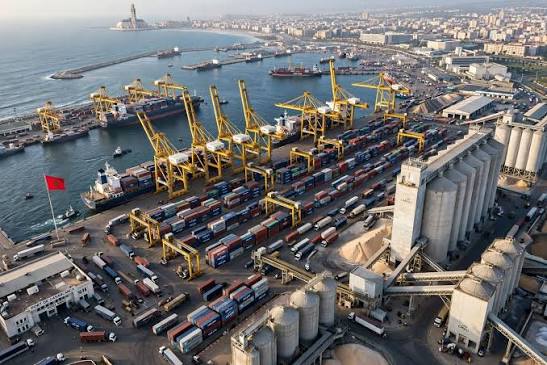
The Port of Lobito occupies a strategic position for exporting minerals from Angola, the DRC and Zambia to Atlantic markets.
Dar es Salaam, meanwhile, is a major maritime gateway for East African economies and several landlocked countries in Central and Southern Africa.
Railway integration could strengthen their complementarity by expanding access to international markets.
For port authorities, this prospect calls for early investment planning in terminals, storage capacity, cargo-handling equipment and digital freight-tracking systems.
Port performance will increasingly be measured not only by the volume of cargo handled at individual facilities, but also by their ability to integrate into reliable regional logistics chains.
AfCFTA: Turning Infrastructure into an Instrument of Trade Integration
The project aligns with the ambitions of the African Continental Free Trade Area (AfCFTA), whose implementation depends significantly on the quality of transport infrastructure and trade facilitation mechanisms.
By connecting distant territories through strategic railway networks, the initiative could support trade in minerals, agricultural commodities and manufactured goods.
It also involves several regional economic communities, particularly the Southern African Development Community (SADC) and the East African Community (EAC), with implications for trade between their member states.
However, successful integration will require harmonised customs procedures, technical standards, transit documentation and railway management systems.
Border posts will need to evolve towards coordinated cargo-processing arrangements to ensure that administrative delays do not offset the efficiency gains generated by rail transport.
AfCFTA cannot fully deliver its economic potential without this convergence between physical infrastructure and trade facilitation.
Investment Opportunities Beyond Railway Construction
The proposed interconnection creates several potential opportunities for public and private investors.
Investment requirements could include:
- Rehabilitation and expansion of railway infrastructure.
- Development of logistics platforms and intermodal terminals.
- Construction of warehouses and economic zones around freight stations.
- Acquisition of rolling stock and cargo-handling equipment.
- Digitalisation of transit procedures and freight-tracking systems.
- Railway maintenance services and infrastructure management.
Investors will nevertheless need to closely monitor the project’s financial structure, concession arrangements, allocation of responsibilities between governments and operators, and mechanisms for securing predictable freight volumes.
Coordinating investments across all the countries involved will be essential to prevent the development of efficient railway sections that remain poorly connected to the wider network.
Why This Matters for African Corridors
The strategic importance of the Tanzania–Angola railway project rests on five major considerations:
- Diversification of maritime access: Landlocked countries could gain additional transport options towards the Atlantic and Indian Ocean.
- Shipper competitiveness: An integrated railway service could improve transport conditions for minerals, industrial products and agricultural commodities.
- Port performance: Lobito and Dar es Salaam could strengthen their roles in regional logistics chains.
- Economic integration: Connecting several national railway networks would help translate AfCFTA’s ambitions into practical infrastructure solutions.
- Investment attractiveness: Complementary infrastructure development could stimulate investment in logistics services and productive activities.
Towards a New Logistics Geography for Central and Southern Africa
The proposed railway connection between Tanzania and Angola represents a potentially significant development for the future of African transport corridors. By envisaging a link between the Lobito Corridor and the Central Corridor, the two countries are opening the way for a transport architecture connecting two of the continent’s major maritime gateways.
However, the project’s economic significance will depend on its operational implementation. TAZARA’s modernisation, infrastructure continuity across the DRC and Zambia, harmonisation of border procedures and coordination of investments will all be decisive factors.
For African cargo owners and shippers, the ultimate measure of success will be whether the connection can reduce logistics costs, improve transit-time reliability and expand access to international markets.
For policymakers and investors, the challenge is now to transform this interoceanic ambition into an integrated, measurable and economically viable transport corridor.
The objective is no longer simply to connect two ports. It is to connect African economies through infrastructure capable of sustainably strengthening their competitiveness.