Abidjan-Lagos Corridor: Togo Advocates for a $10B Revised Budget to Accelerate Regional Highway Financing
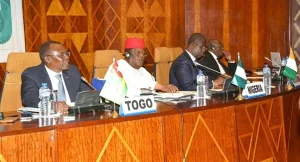
Togo proposes optimizing the Abidjan-Lagos highway project cost from $15B to $10B to ease sovereign debt burdens and attract institutional investors.
The economic viability of major transport infrastructure projects across West Africa has entered a strategic phase of financial re-engineering. Facing an initial estimated price tag of $15 billion for the flagship Abidjan-Lagos highway project, Togo has formally proposed a major budget restructuring. The primary institutional objective is to optimize the overall financial package, reducing the project footprint to $13 billion or potentially $10 billion.
This high-level intervention marks a decisive transition from early-stage feasibility studies to structural financial structuring. By reducing the direct fiscal exposure and debt burden on the five corridor member states, regional policymakers aim to unblock commitments from multilateral development banks and enhance the appeal of public-private partnership (PPP) frameworks along West Africa’s most densely traveled trade route.
Financial Engineering & Revenue Pooling: Togo’s Cost-Optimization Strategy
Presented during the 23rd Ministerial Steering Committee meeting held in Lomé, Togo’s proposal—led by Sani Yaya, Minister Delegate for Public Works and Infrastructure—relies on technical value engineering and rightsizing parameters. Achieving economies of scale is designed to fortify the project’s financial underwriting without compromising structural engineering standards or long-term operational performance.
                  FINANCIAL POOLING & CROSS-SUBSIDIZATION MECHANISM
┌─────────────────────────────────────────────────────────────────┐
│           Abidjan-Lagos Corridor Management Authority           │
│                             (ALCoMA)                            │
└────────────────────────────────┬────────────────────────────────┘
                                 │
                 ┌───────────────┴───────────────┐
                 ▼                               ▼
     High-Density Traffic Sections         Intermediate Trade Sections
   (e.g., Nigeria - Lagos / Ghana)           (e.g., Togo / Benin)
                 │                               │
                 └───────────────┬───────────────┘
                                 │
                                 ▼
         [ Toll Revenue Cross-Subsidization & Revenue Pooling ]
                                 │
                                 ▼
              Balanced Multi-State Debt Service Coverage
Beyond direct capital expenditure (CAPEX) reductions, Lomé advocates for a cross-border financial pooling mechanism to distribute fiscal obligations among the five coastal nations (Côte d’Ivoire, Ghana, Togo, Benin, and Nigeria). This regional risk-sharing model leverages toll revenues generated from high-density segments to offset financing costs on intermediate sections with lower immediate traffic volumes.
“For Togo, additional cost efficiencies should be pursued to further reduce the overall project budget,” stated the Togolese Ministry of Public Works and Infrastructure, urging technical experts and development finance institutions to prioritize value engineering.
Cross-Border Governance: Accelerating the Operationalization of ALCoMA
Executing the 1,028-kilometer, six-lane dual-carriageway project requires robust supranational oversight. Togo has called for the immediate operationalization of the Abidjan-Lagos Corridor Management Authority (ALCoMA), specifically through the appointment of its Director General and the structuring of its core technical divisions.
Following the inaugural meeting of ALCoMA’s Board of Directors in Lagos, activating its human resources and finance subcommittees is seen as a vital signal of transparency for institutional private capital. Concurrently, the African Development Bank (AfDB) and the ECOWAS Commission have intensified joint country missions to finalize co-financing arrangements and transition the asset to bankability.
Key Operational Priorities for Corridor Governance:
-
Customs Alignment: Standardizing transit protocols and operating procedures at Joint Border Posts (JBPs).
-
Revenue Security: Establishing a centralized financial clearinghouse under ALCoMA for automated toll collection.
-
Technical Standardization: Harmonizing asset management and heavy maintenance specifications across sovereign jurisdictions.
Why This Matters for African Corridors
Lower Freight Tariffs: A 33% reduction in overall CAPEX lowers debt service requirements, dampening the need for excessive user tolls on hauliers.
Streamlined Border Processing: ALCoMA’s operational mandate provides the institutional umbrella required for digital cross-border customs integration.
Reduced Transit Times: Constructing a continuous 2×3 lane highway eliminates urban bottle-necks linking major West African container ports.
Regional Competitiveness & AfCFTA: The Backbone of West African Trade
The Abidjan-Lagos corridor accounts for more than 75% of total cross-border trade within the ECOWAS sub-region. Connecting five primary commercial gateways—Abidjan, Tema, Lomé, Cotonou, and Lagos—the highway serves as the logistical backbone connecting maritime trade to landlocked hinterland markets (Burkina Faso, Mali, and Niger).
╔═══════════════════════════════════════════════════════════════════════════╗
║                   ABIDJAN-LAGOS CORRIDOR IMPACT MATRIX                    ║
╠═════════════════════════════════╦═════════════════════════════════════════╣
║ Performance Metric              ║ Projected Operational Impact            ║
╠═════════════════════════════════╬═════════════════════════════════════════╣
║ Share of West African Trade     ║ 75% of regional commercial exchanges    ║
║ Average Transit Window          ║ Projected 40% to 50% time savings       ║
║ Commercial Vehicle Speeds       ║ Increase from 25 km/h to 80 km/h        ║
║ Maritime Gateway Integration    ║ Direct connection of 5 hub seaports     ║
╚═════════════════════════════════╩═════════════════════════════════════════╝
Under the African Continental Free Trade Area (AfCFTA), lowering logistics costs per tonne-kilometer along this trade arterial is vital to boosting African cargo owners’ market reach. Modernizing regional value chains depends directly on removing non-tariff barriers and physical road congestion.
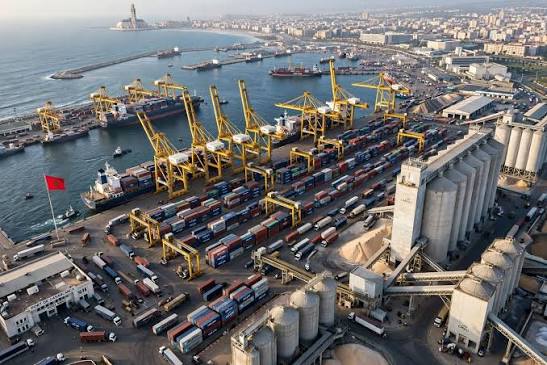
For Togo, whose economy relies heavily on transshipment activities at the Port of Lomé, restructuring the project’s financial commitments accelerates project bankability while establishing Lomé as an essential multimodal hub within the broader West African logistics landscape.
Togo’s optimization proposal reflects a pragmatic shift toward the bankability of the Abidjan-Lagos highway. By aligning infrastructure investments with regional fiscal realities, ECOWAS member states are laying the groundwork for a sustainable model of West African logistics integration