
Lobito Corridor: US backs new energy investment phase in DRC and Zambia.
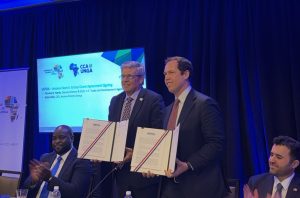
The Lobito logistics corridor is entering a new phase in which energy availability is becoming a key factor in its performance. On September 22, 2026, the U.S. Trade and Development Agency (USTDA) signed an agreement with Anzana Electric Group to finance a feasibility study focused on hydropower generation and electricity distribution networks in the Democratic Republic of Congo (DRC) and Zambia. The project targets copper and cobalt mining areas and aims to improve access to reliable electricity for more than 3 million people. Beyond power supply, the issue directly affects the corridor’s ability to support the extraction, processing and movement of critical minerals toward the port of Lobito and international markets.
Lobito Corridor: energy becomes a logistics infrastructure priority
The Lobito Corridor is often analysed through the lens of rail, roads, border posts and the Port of Lobito in Angola. The USTDA-backed project adds another dimension: electricity reliability is becoming part of the corridor’s overall logistics performance.
The feasibility study will examine three main areas: the rehabilitation of existing hydropower facilities, the development of new generation capacity and the expansion of electricity distribution networks.

The targeted infrastructure is located mainly in Lualaba Province in the DRC and north-western provinces of Zambia, two areas closely linked to regional mining activity.
For shippers and industrial operators, the issue is operational. Unreliable power can cause production stoppages, increase operating costs and disrupt shipment schedules. These effects can then translate into lower volumes available for rail and maritime transport.
Copper and cobalt mining: reducing diesel dependence
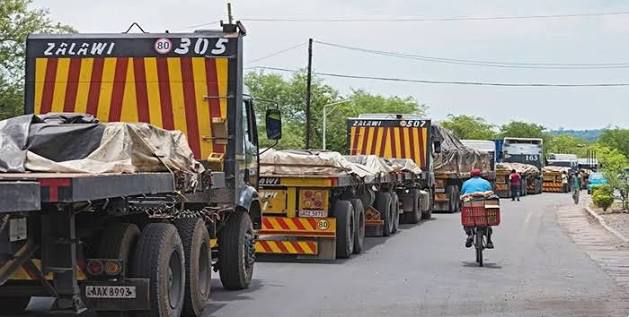
The Lobito Corridor plays an increasing role in moving copper, cobalt and other critical minerals to international markets.
Mining operations consume a significant share of available electricity in both the DRC and Zambia. Companies operating along the corridor may therefore rely on diesel generators when grid supply is insufficient or unreliable.
This dependence increases industrial costs. It also creates an additional constraint for mining supply chains already exposed to transport delays, rail capacity limitations and port bottlenecks.
Improving electricity reliability could therefore have a direct impact on the logistics competitiveness of the Lobito Corridor. For mining operators, more stable power could help maintain production rates and better synchronise output with available transport capacity.
Feasibility study comes before major infrastructure investment
It is important to distinguish between a feasibility study and direct infrastructure investment.
At this stage, the USTDA is not financing the construction of the proposed new power plants or distribution networks. It is financing a study designed to determine which hydropower facilities should be rehabilitated, what new generation capacity may be required and where distribution networks should be expanded.
The announced USTDA assistance amounts to $3 million.
The study will also identify suitable US suppliers and structure the project to help attract future financing. It could therefore become an initial step toward much larger investments in electricity generation and distribution.
For investors, this phase matters because it can turn an identified energy constraint along the corridor into technically and financially structured projects.
Why it matters for African corridors
Transport performance also depends on energy.
Mining supply chains cannot operate efficiently if production and processing facilities face repeated power interruptions.
Mineral competitiveness depends on industrial costs.
Reducing reliance on diesel generation could improve the cost structure of mining operations and strengthen their international competitiveness.
The corridor could attract integrated infrastructure investment.
Power generation, rail transport, port infrastructure and mineral processing can increasingly be considered as parts of the same investment ecosystem.
A wider SADC and African value-chain issue
The implications extend beyond the DRC and Zambia. The Lobito Corridor connects mining areas in Central and Southern Africa to the Port of Lobito in Angola, offering an alternative route for mineral exports.
This has direct relevance for the Southern African Development Community (SADC), where several economies depend heavily on mining exports and cross-border transport infrastructure.
Over the longer term, stronger electricity networks could also support local mineral processing. This is strategically important for the African Continental Free Trade Area (AfCFTA), which aims to increase value addition within Africa rather than leaving supply chains focused mainly on the export of raw materials.
Greater power availability could support processing and beneficiation closer to mining areas. That could gradually change cargo flows and increase demand for multimodal transport infrastructure.
Lobito Corridor emerges as an integrated investment platform
The USTDA initiative adds to other US-backed support for the corridor, including projects involving electricity generation, digital connectivity, port infrastructure and critical-mineral value chains.
This approach reflects a broader shift in how corridor investments are structured. A corridor’s performance no longer depends only on a railway or a port. It increasingly depends on the simultaneous availability of reliable energy, industrial capacity, digital infrastructure and efficient transport systems.
For governments and investors, the key indicator will therefore be whether feasibility studies can translate into operational infrastructure capable of increasing production, reducing costs and securing cargo volumes.
The USTDA-backed energy project adds a new dimension to the development of the Lobito Corridor. In the DRC and Zambia, reliable electricity directly affects mining performance and, consequently, the volumes that can feed logistics chains towards Angola. If the feasibility work leads to concrete investments in hydropower and distribution networks, the corridor could strengthen its role in African and global supply chains for copper, cobalt and other critical minerals.