
Malian Cargo at Abidjan: Burkina Faso Mobilizes Carriers to Improve Corridor Flows

A Short-Term Operation Revealing a Structural Corridor Challenge
The mobilization of Burkinabe road carriers to help evacuate Malian cargo stranded at the Port of Abidjan highlights a central challenge facing African logistics corridors: the ability to maintain cargo flows when pressure builds on one part of the supply chain.
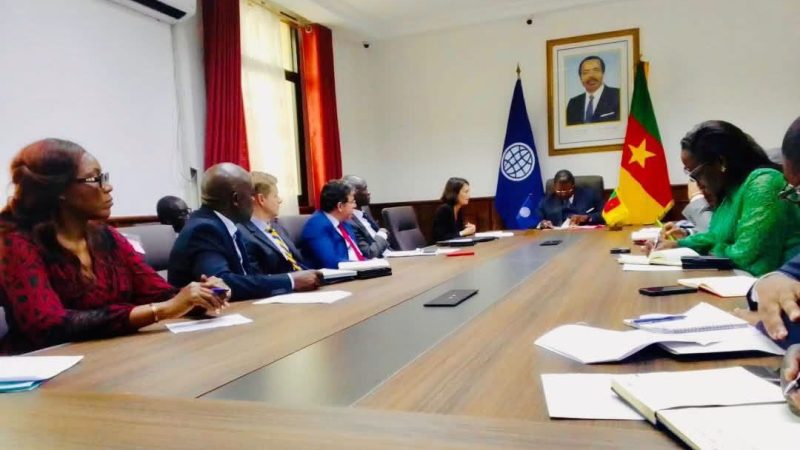
On August 24, 2026, the Conseil Burkinabè des Chargeurs (CBC), Burkina Faso’s Shippers’ Council, held a working session with a Malian delegation representing the Conseil Malien des Chargeurs, the Conseil Malien des Transporteurs Routiers and the Chamber of Commerce and Industry of Mali.
The objective was to identify available transport capacity in Burkina Faso and facilitate its deployment to move Malian cargo from Abidjan.

Beyond this immediate operation, the situation raises a broader strategic question: how can the Abidjan-Bamako corridor become more resilient while reducing the economic cost of disruptions for landlocked shippers?
A Coordinated Effort to Move Malian Cargo
The meeting in Ouagadougou was part of an advocacy and mobilization mission launched by Malian stakeholders in response to the accumulation of cargo at the Port of Abidjan.
The approach is essentially operational: identify carriers with available capacity, assess their ability to take on additional cargo and establish the practical conditions required for their intervention along the corridor.
The CBC therefore acted as an interface between Malian stakeholders and Burkina Faso’s road transport ecosystem.
Following the discussions, the Malian delegation was accompanied by the CBC to the Faitière unique des Transporteurs routiers du Burkina (FUTRB) and the Union des Chauffeurs routiers du Burkina (UCRB) to discuss the operational arrangements and conditions of the proposed intervention.
This sequence illustrates an increasingly important role for shippers’ councils: not only representing importers and exporters, but also helping resolve operational bottlenecks affecting regional supply chains.
“Trade facilitation is one of the institution’s areas of intervention.” — Denise Bado/Bouda, Director General of the CBC.
The Abidjan-Bamako Corridor and the Challenge of Transit Continuity
For Mali, a landlocked country, access to maritime gateways is a strategic component of international trade competitiveness.
The corridor linking Mali to Côte d’Ivoire’s ports is part of a wider West African transport network. The African Development Bank has identified transport corridors connecting landlocked countries such as Mali and Burkina Faso to Ivorian ports as critical infrastructure for regional trade.
The performance of a corridor, however, depends on much more than road infrastructure.
It is determined by the entire logistics chain: availability of trucks, port operations, customs procedures, border controls, security, information systems and coordination between shippers and carriers.
Cargo immobilized at a port can therefore generate costs well beyond the direct cost of transportation.
Transit Time Is an Economic Variable
For shippers, every additional day within a logistics chain can affect inventory rotation, contractual commitments, financing costs and the availability of goods.
In the current situation, the immediate priority is therefore to reduce the time between cargo becoming available at the port and its actual departure toward Mali.
The source information does not provide the precise volume of cargo concerned or an average evacuation time. It would therefore be premature to quantify the expected gains.
The key performance indicator will instead be the ability to convert available transport capacity into actual truck rotations quickly and efficiently.
For Shippers, Transport Availability Is as Strategic as Infrastructure
The operation also highlights a frequently underestimated dimension of corridor policy: infrastructure investment alone is insufficient if transport supply lacks the flexibility required to absorb fluctuations in demand.
Burkina Faso has a significant road transport ecosystem connected to regional freight flows. Mobilizing part of this capacity for Malian cargo can provide a temporary buffer against logistics congestion.
This is particularly important for landlocked economies.
The principle is straightforward: the more diversified a corridor’s carrier base and the faster transport capacity can be mobilized, the better the corridor can absorb shocks without completely interrupting trade flows.
For shippers, this reinforces the value of maintaining multiple transport options and contingency arrangements in case of congestion or capacity constraints.
From Emergency Response to Long-Term Corridor Performance
The current situation should therefore be viewed as a signal of the need to strengthen the corridor beyond short-term interventions.
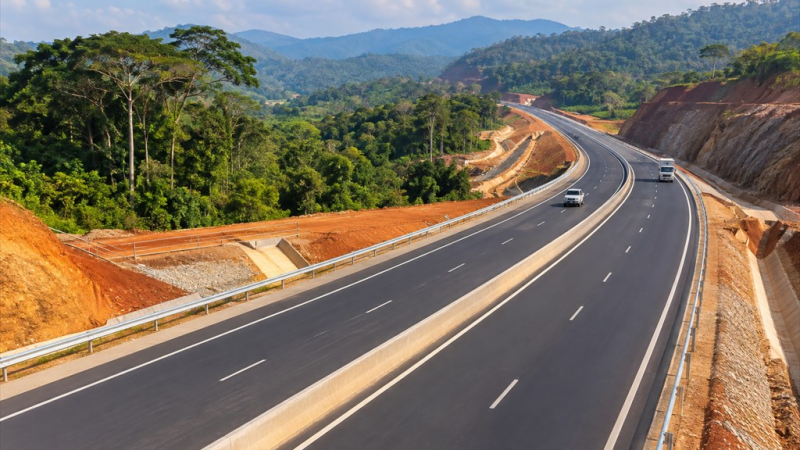
The African Development Bank has supported programs aimed at improving road infrastructure and transport facilitation between Burkina Faso, Mali and Côte d’Ivoire.
In 2024, the African Development Fund approved more than €156 million for the rehabilitation and construction of 242 kilometers of cross-border roads, with the objective of reducing non-tariff barriers, administrative procedures and border-crossing times.
Another project covering the Bamako-Zantiebougou-Boundiali-San Pedro corridor aims to improve connectivity and reduce travel and transportation costs.
These investments underline a fundamental reality: the competitiveness of Mali’s trade cannot be separated from the quality of its connections to maritime gateways.
Towards Greater Multimodal Integration?
The challenge also extends beyond road transport.
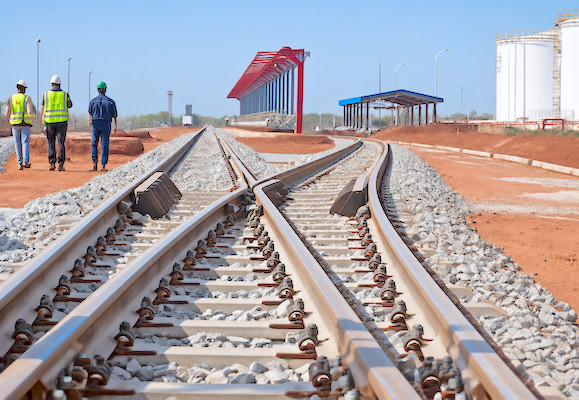
Over the medium term, greater modal diversification — particularly through rail — could reduce dependence on a single transport mode and provide additional capacity for growing freight volumes.
The Economic Community of West African States (ECOWAS) has identified several railway modernization projects designed to improve connections between coastal ports and landlocked economies.
Among them is a proposed Côte d’Ivoire-Mali/Burkina Faso-Niger railway corridor connecting Abidjan, Bamako, Ouagadougou, Niamey and Gao over a planned route of approximately 2,513 kilometers.
The integration of road, rail and port infrastructure could therefore become a major pillar of corridor resilience.
Shippers’ Councils Are Taking on a More Strategic Role
The CBC’s intervention also illustrates the changing role of shippers’ organizations.
In an environment increasingly exposed to logistics disruptions, their responsibilities extend beyond representing importers and exporters.
They can contribute to:
- identifying logistics bottlenecks;
- coordinating shippers and transport operators;
- monitoring transit costs and delivery times;
- facilitating public-private dialogue;
- anticipating transport capacity constraints;
- promoting alternative routing and transport solutions.
The cooperation between Malian and Burkinabe shippers’ organizations therefore represents a form of operational corridor governance, particularly relevant in a region where several landlocked economies depend on the same maritime gateways.
Why This Matters for African Corridors
1. Resilience: Mobilizing additional carriers can provide temporary capacity when freight volumes exceed available transport resources.
2. Transit time: The speed at which trucks can be deployed becomes critical when cargo is already accumulating at a port.
3. Logistics costs: Greater fluidity can potentially reduce costs associated with waiting, storage and disrupted supply planning.
4. Competitiveness: For a landlocked economy such as Mali, corridor performance directly influences the competitiveness of imports and exports.
5. Regional integration: More efficient Abidjan-Mali and Abidjan-Burkina Faso connections contribute to the wider development of an integrated West African trade area.
Turning Corridor Access into Logistics Performance
The mobilization of Burkinabe carriers goes beyond the immediate evacuation of Malian cargo.
It highlights a broader challenge for West Africa: building logistics corridors capable of absorbing shocks, maintaining cargo flows and delivering competitive transport costs and transit times.
This issue takes on additional importance under the African Continental Free Trade Area (AfCFTA).
The African Union presents the AfCFTA as a continental market covering 55 countries and more than 1.3 billion people. Its success depends not only on reducing trade barriers, but also on the ability of infrastructure and logistics systems to physically connect markets.
In other words, trade liberalization can only deliver its full economic potential if goods can actually move across borders at competitive cost and speed.
The Abidjan-Bamako corridor provides a concrete example of this equation.
Corridor Performance Must Be Measured by Its Ability to Deliver
The CBC’s engagement with Burkinabe transport operators provides an operational response to an immediate challenge affecting Malian shippers.
Its strategic significance, however, is broader.
It demonstrates that a high-performing corridor is not simply a road, a port or a border post. It is an interconnected system of infrastructure, transport services, procedures and institutions capable of keeping goods moving even under pressure.
For governments, the priority is to turn temporary coordination mechanisms into permanent corridor-management capabilities.
For shippers, the objective is greater visibility over transport capacity, transit times, costs and alternative routes.
For investors, the needs are equally clear: road and rail infrastructure, logistics platforms, digital transit systems, cargo tracking, multimodal transport solutions and services supporting carriers and shippers.
The competitiveness of Mali, Burkina Faso and the wider West African hinterland will increasingly depend on the ability of regional corridors to transform access to seaports into measurable logistics performance.
Analyze. Measure. Connect African Corridors.