Abidjan-Lagos Corridor: John Mahama Urges West African Leaders to Accelerate Regional Logistics Integration
West Africa’s economic integration continues to face a major obstacle: inadequate transport infrastructure and delays in implementing regional projects. Ghanaian President John Dramani Mahama brought this issue back to the forefront during the West Africa Integration and Investment Summit (WAIIS), held on November 18, 2026, in Freetown, Sierra Leone. He particularly criticised the delays surrounding the Abidjan-Lagos Corridor, a strategic transport route designed to improve the movement of goods and people between several of the region’s largest economies. His remarks highlight a fundamental contradiction: while regional trade integration ambitions continue to advance, the infrastructure required to translate these ambitions into reality remains insufficiently developed.
A strategic corridor still facing implementation delays
The Abidjan-Lagos Corridor is one of the most important infrastructure projects supporting economic integration in West Africa. It is intended to strengthen connectivity between five coastal countries: Côte d’Ivoire, Ghana, Togo, Benin and Nigeria.
The route has significant potential for road freight, commercial exchanges and the movement of goods between major economic centres along the Atlantic coast.
However, according to John Mahama, the project’s implementation timeline illustrates the difficulties of regional cooperation.
The Ghanaian president recalled that the corridor concept was already being discussed when he held ministerial responsibilities in the late 1990s.
Nearly three decades later, he believes the project has yet to reach the level of implementation originally expected.
“Today, I am approaching 70 years, and the Abidjan-Lagos Corridor is still at the project stage.”
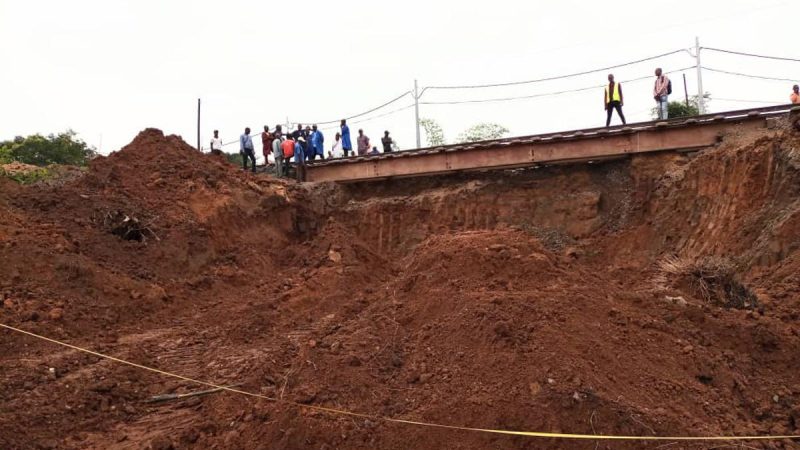
His statement highlights a structural problem: cross-border infrastructure projects can remain stalled for years between political announcements, technical studies, financing arrangements and actual construction.
For transport operators and cargo owners, these delays create additional uncertainty in regional supply chain planning.
Inadequate infrastructure continues to constrain intra-African trade
Beyond the Abidjan-Lagos Corridor, Mahama highlighted the physical infrastructure constraints limiting commercial exchanges across the continent.
Despite the implementation of the African Continental Free Trade Area (AfCFTA), the growth of trade between African countries remains constrained by several logistical challenges.
According to figures cited by the Ghanaian president during the summit, intra-African trade reportedly increased from approximately 11% to 15% of total trade.
This remains modest compared with the ambitions of creating an integrated continental market.
Mahama identified three essential infrastructure categories:
- Ports, to facilitate imports, exports and transshipment operations.
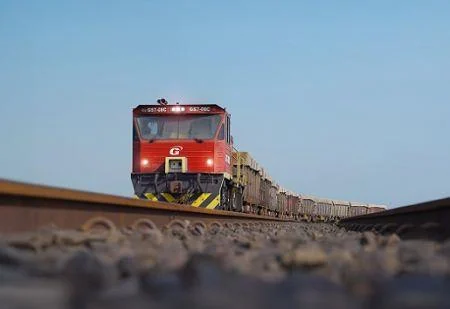
- Railways, to develop freight transport solutions capable of moving large volumes of goods and reducing dependence on road transport.
- Roads, to ensure continuous connections between production centres, logistics platforms and consumer markets.
“But the main constraint is logistics. Do we have ports? Do we have railways? Do we have roads?”
This question captures one of the AfCFTA’s main challenges: gradually removing trade barriers is not enough if goods continue to face significant physical and operational constraints.
Joint border posts to reduce transit times
One of the most important challenges facing the Abidjan-Lagos Corridor concerns the efficiency of cross-border movements.
Mahama advocated the development of a regional highway supported by joint border posts, without repeated police and security barriers.
This approach is consistent with the concept of One-Stop Border Posts (OSBPs), which allows authorities from neighbouring countries to coordinate border formalities at a shared facility.
The objective is to reduce repeated vehicle stops, duplicated inspections and administrative delays affecting international freight transport.
For road freight operators, shorter waiting times can improve truck turnaround and equipment utilisation.
For cargo owners, more predictable transit times make it easier to manage inventory, schedule deliveries and reduce costs associated with immobilised goods.
The corridor’s performance therefore depends on more than highway construction. It also requires interconnected customs systems, coordinated public administrations and harmonised transit procedures.
ECO: A proposal to facilitate regional trade payments
The Ghanaian president also proposed a new approach to the long-delayed West African single currency project, known as the ECO.
Faced with repeated delays in meeting economic convergence criteria across ECOWAS member states, John Mahama wants countries that are ready to adopt the currency to be allowed to proceed without waiting for all other members.
He indicated that he and Sierra Leonean President Julius Maada Bio had presented this proposal during a previous regional summit.
The proposed arrangement would allow the ECO to operate alongside national currencies.
Its objective would include facilitating commercial settlements between participating countries without systematically relying on the US dollar.
For businesses involved in regional trade, this approach could offer several potential advantages:
- Reduce certain currency conversion operations.
- Simplify cross-border commercial settlements.
- Limit some exposure to foreign exchange fluctuations.
- Facilitate transactions between regional suppliers and buyers.
However, this remains a political proposal. Its implementation would depend on institutional decisions, settlement mechanisms, monetary stability and confidence among economic operators.
AfCFTA: Turning trade ambitions into logistics performance
Mahama’s intervention raises a fundamental question about the future of African trade: how can the continent build a competitive regional market without infrastructure capable of ensuring the fast and predictable movement of goods?
The Abidjan-Lagos Corridor could play a decisive role in this transformation.
Its development would strengthen connections between several major markets, facilitate trade between port platforms and industrial zones, and support regional supply chains.
However, infrastructure development must be accompanied by operational reforms.
Digital customs procedures, interoperable transit systems, improved road security and coordinated tariff policies are essential components.
In the longer term, better integration between road, port and rail infrastructure could also encourage the development of multimodal transport.
For AfCFTA, the challenge is to move from primarily regulatory integration towards genuinely operational economic integration.
WAIIS: Connecting infrastructure projects with investment financing
The West Africa Integration and Investment Summit, organised under the leadership of Sierra Leonean President Julius Maada Bio, aims to strengthen connections between governments, financial institutions, investors and the private sector.
According to figures presented in the context of the summit, West Africa represents a market of more than 450 million people, with reported regional growth of 4.7% and an investment pipeline exceeding $180 billion across four strategic pillars.
These indicators illustrate the region’s economic importance, but they do not automatically guarantee infrastructure delivery.
To attract private capital, projects need credible business models, clearly identified financing mechanisms and sufficient visibility regarding regulatory and operational risks.
The Abidjan-Lagos Corridor could therefore create investment opportunities for construction companies, transport operators, infrastructure managers, digital technology providers and institutional investors.
The central challenge will be turning regional commitments into financed, implemented and measurable projects.
Why this matters for African logistics corridors
The Abidjan-Lagos Corridor is more than a road infrastructure project. It represents a critical component of West Africa’s economic competitiveness.
- For cargo owners: Greater delivery predictability and potentially lower transport costs.
- For transport operators: Improved vehicle turnaround and reduced border waiting times.
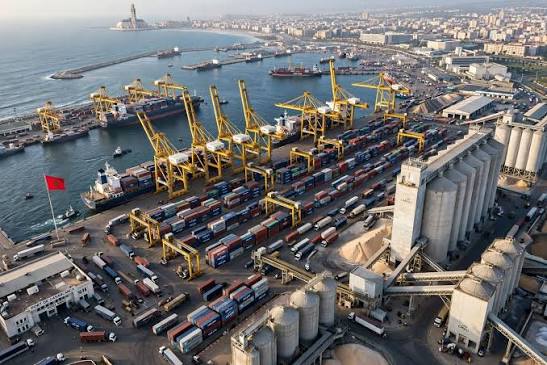
- For ports: Expanded hinterland connectivity and better access to regional markets.
- For investors: Opportunities in infrastructure, logistics services and digital systems.
- For ECOWAS: A concrete step towards regional economic and trade integration.
Moving from political commitments to operational delivery
John Dramani Mahama’s intervention in Freetown highlights a fundamental reality: West African economic integration cannot advance sustainably without a significant transformation of its infrastructure and logistics systems.
The Abidjan-Lagos Corridor, discussed for several decades, represents an important test of the ability of governments to translate regional commitments into concrete results.
Its completion, supported by modernised joint border posts, harmonised customs procedures and efficient multimodal connections, could strengthen business competitiveness and facilitate trade across the regional economic community.
For policymakers, investors and logistics operators, the real measure of progress will no longer be the number of political declarations, but the ability to measure kilometres completed, transit times reduced, logistics costs controlled and additional trade volumes generated.
The future of West African integration will depend on this ability to transform ambitions into measurable performance.