Lobito Corridor: AFC Selects Preferred EPC Contractors for Zambia’s 830 km Railway Project
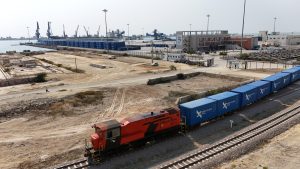
Lobito Corridor Railway Project Moves Closer to Implementation
The Lobito Corridor has reached another milestone in the development of transport infrastructure in Southern Africa. Africa Finance Corporation (AFC), the project sponsor and developer of the Zambia-Lobito railway, has selected preferred bidders for the engineering, procurement and construction (EPC) contracts covering a new 830-kilometre railway line. Announced on October 27, 2026, the decision paves the way for contract negotiations scheduled to begin in November.
The project aims to connect Zambia’s economic and mining regions to the Atlantic port of Lobito in Angola. For copper, cobalt and agricultural exporters, the railway could expand freight-routing options to international markets. For investors and logistics operators, the immediate challenge is to turn this contractual milestone into effective transport capacity, supported by competitive costs, predictable transit times and efficient connections between rail and port operations.
Lobito-Zambia Railway: Two Preferred Consortia Selected for EPC Contracts
Africa Finance Corporation announced the selection of two groups of companies following an international competitive tender.
For the Zambian section, the consortium comprising Webuild SpA, Mota-Engil and IC İçtaş Construction was selected as the preferred bidder. For the Angolan section, the consortium formed by Mota-Engil and Odebrecht Engineering and Construction received the same designation.
Negotiations are scheduled to begin in November 2026. The stated objective is to conclude the EPC agreements within eight to twelve weeks, subject to satisfactory technical, commercial and legal negotiations.
This decision reduces some of the uncertainty surrounding the selection of the companies responsible for constructing the infrastructure. However, preferred-bidder status does not mean that the contracts have been signed or that construction has begun.
The final agreements will need to clarify contractors’ obligations, implementation schedules, payment arrangements, risk-management mechanisms and procedures for accepting completed works.
A Railway Corridor to Strengthen Zambia’s Access to the Atlantic
An alternative logistics route for mineral exports
Zambia is a major copper producer with significant strategic mineral resources. For its exporters, competitiveness also depends on the ability to transport these commodities to international markets under predictable operating conditions.
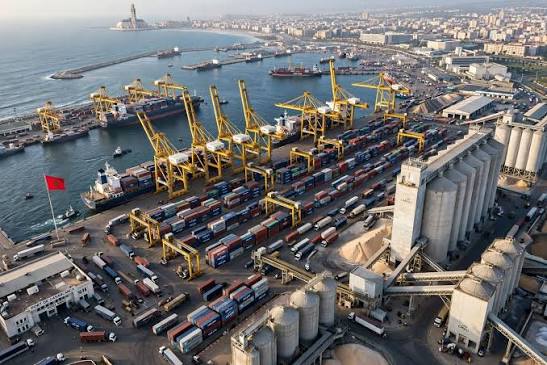
The railway link to Lobito is intended to complement existing freight routes. Angola’s port provides the corridor’s Atlantic maritime gateway, while the planned infrastructure is expected to improve connections with Zambian production areas and commercial markets.
For mining shippers, the potential economic value will depend on several factors: available capacity, freight cost per tonne, train frequency, cargo-handling times and port operating efficiency.
Rail can offer advantages for large volumes transported over long distances. However, the actual benefits will depend on the performance of the entire logistics chain, from the production site to the vessel.
Agricultural cargo offers an additional opportunity
The project is not limited to minerals. According to AFC, the railway is also intended to facilitate the movement of agricultural products.
This diversification could broaden the corridor’s commercial base and spread infrastructure costs across several cargo categories. It will nevertheless require services suited to different freight flows, including storage, handling, scheduling and, where necessary, facilities for products sensitive to transit times or storage conditions.
The ability to attract regular agricultural volumes will therefore be an important factor in the railway system’s commercial viability.
Logistics Costs and Transit Times: Key Performance Indicators to Monitor
One of the Lobito Corridor’s objectives is to reduce logistics costs and improve access to global markets. At this stage, the information released alongside the EPC announcement does not establish quantified savings or specific reductions in transit times.
To assess future benefits, shippers will need to compare the total cost of available routes rather than railway tariffs alone.
The main indicators to monitor include:
- Logistics cost per tonne: Inland transport, handling, storage, port charges and administrative formalities.
- Door-to-port transit time: The elapsed time between the cargo’s point of loading and arrival at the maritime terminal.
- Delivery reliability: The difference between planned and actual transit times.
- Capacity and availability: Train frequency, rolling stock availability and port handling capacity.
- Interface performance: Terminal waiting times, coordination between transport operators and the efficiency of customs procedures.
These indicators will help determine whether the corridor provides exporters with a sustainable operational advantage.
Competitiveness will therefore depend on more than completing the railway line. Service quality, equipment availability, cross-border coordination and the efficiency of the Lobito terminal will also be decisive.
Financing and Governance: Conditions for Project Delivery
AFC is developing the project through Trans African Rail Company FZCO (TARC), the project holding company, together with Zambia Lobito Railway Limited and Zambia Lobito Railway SA.
The development process forms part of a cooperation framework launched in October 2023 through a memorandum of understanding involving the governments of Angola and Zambia, the European Union, the United States, Italy and the African Development Bank.
According to the information provided, milestones include concession agreements signed in 2024, intergovernmental agreements in 2025 and progress on preliminary engineering studies. Environmental and social impact assessments, together with resettlement action plans, are also part of the preparatory work.
Italy is supporting the participation of its companies in African infrastructure projects through its Mattei Plan for Africa. The announced financing framework includes €250 million from Cassa Depositi e Prestiti (CDP), supported by Italian export credit agency SACE.
For investors, the next decisive milestone will be the conclusion of the EPC contracts, followed by greater clarity on financing arrangements and implementation schedules. Managing construction risks, coordinating the two countries and securing efficient railway-port interfaces will be essential to project delivery.
Why It Matters for African Logistics Corridors
Diversifying trade routes. The corridor could give Zambian exporters an additional route to international markets through the Atlantic, reducing reliance on certain existing transport options.
Developing regional value chains. Combining rail freight, logistics platforms and industrial activity could support local mineral processing and agricultural trade. These outcomes will depend on complementary investment and sufficient commercial demand.
Creating opportunities for investors and operators. The project could generate demand for rolling stock, cargo handling, warehousing, railway services, freight management and digital shipment-tracking solutions.
Lobito Corridor, SADC and AfCFTA: A Regional Integration Opportunity
The project has strategic implications for Southern Africa, particularly for trade between Zambia and Angola. It forms part of a regional environment in which the Southern African Development Community (SADC) seeks to strengthen connections between markets, infrastructure and transport networks.
At the continental level, the corridor could support the objectives of the African Continental Free Trade Area (AfCFTA) by improving physical access to markets. However, lower trade barriers alone cannot deliver the full benefits of integration when infrastructure is inadequate or transit procedures generate excessive costs.
The corridor’s economic value will therefore depend on its ability to operate as an integrated multimodal system encompassing rail freight, port operations, customs procedures, storage and distribution.
Industrialisation is another important consideration. Mineral transport can generate substantial freight volumes, but broader economic benefits will depend on local businesses developing related services, processing more resources domestically and participating in regional supply chains.
Operational Performance Will Determine the Corridor’s Value
The selection of preferred EPC bidders marks progress in the development of the Lobito Corridor. However, the project’s economic value will ultimately depend on its ability to move cargo reliably and competitively.
For shippers, the main priorities will be total cost per tonne, transit times, rolling stock availability and port operating performance. For investors, contract finalisation and effective management of implementation risks will be the next milestones to watch.
The Lobito Corridor could strengthen commercial connectivity between Zambia and the Atlantic. Its contribution to regional integration will nevertheless depend on the infrastructure being delivered and its ability to support sustained trade, investment and economic transformation across Southern Africa.Source:www.africafc.org